Talk to The Body Keeps the Score like its author wrote you back.
Get the ideas that fit your life — not generic summaries.
- Chat with the book
- Audiobook-style main ideas
- Adapts to your life and goals
- Helps you take action
The Body Keeps the Score, in detail
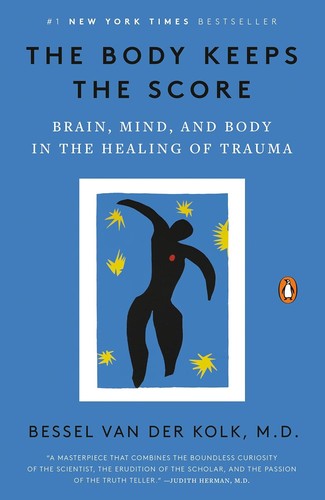
The Body Keeps the Score is Bessel van der Kolk's account of four decades spent studying and treating trauma, from Vietnam veterans at the VA in the 1970s to survivors of childhood abuse, accidents, and domestic violence. Van der Kolk's central argument is that trauma is not primarily a psychological event stored in memory — it is a physiological one, encoded in the body itself. The nervous system learns to treat ordinary moments as dangerous, and no amount of talking alone can reach the parts of the brain that keep replaying the alarm.
The book moves through three main territories. First, van der Kolk explains what trauma does to the brain and body: how the amygdala stays on high alert, how the prefrontal cortex goes offline under threat, how survivors lose the ability to feel safe in their own skin. He draws heavily on neuroimaging research, much of it his own, to show that trauma changes brain structure in measurable ways. This is not metaphor. The body literally keeps the score of overwhelming experience.
Second, van der Kolk surveys the limitations of talk therapy and medication. He is not dismissive — he acknowledges that both help some people — but his argument is that treatments focused on narrative and cognition often leave the body untouched, and that the body is where the real work needs to happen. The middle sections of the book introduce the approaches he finds most promising: EMDR, yoga, theater, neurofeedback, and body-based therapies that help survivors regain a felt sense of safety from the inside rather than through understanding alone.
Third, the book addresses developmental trauma — what happens when the damage begins in early childhood, before language or coherent memory. These chapters are the most sobering. Van der Kolk argues that the DSM's categories poorly capture the diffuse, pervasive effects of chronic early trauma, and that systems meant to help — schools, foster care, the criminal justice system — often make things worse. The writing is clinical but not cold, and the case histories throughout give the research a human face. The book is long and occasionally repetitive, but for clinicians, survivors, and anyone who loves someone struggling with trauma, it remains one of the most rigorous and humane accounts available.
The big ideas
- 1.
Trauma is stored in the body, not just the mind. The nervous system learns to treat ordinary situations as dangerous, and this pattern persists long after the original threat is gone.
- 2.
The prefrontal cortex — the seat of reason and language — goes partially offline during trauma responses. This is why survivors often cannot simply think their way to safety.
- 3.
Trauma changes brain structure in measurable ways. Neuroimaging shows altered activity in the amygdala, prefrontal cortex, and insula in people with PTSD.
