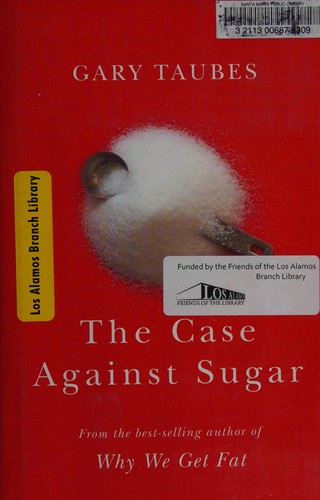
Talk to The Case Against Sugar like its author wrote you back.
Get the ideas that fit your life — not generic summaries.
- Chat with the book
- Audiobook-style main ideas
- Adapts to your life and goals
- Helps you take action
The Case Against Sugar, in detail
The Case Against Sugar is Gary Taubes's focused argument that sugar — sucrose and high-fructose corn syrup specifically — is the primary cause of the obesity and diabetes epidemics, and the likely driver of the cluster of diseases, from heart disease to Alzheimer's, that researchers now associate with insulin resistance and metabolic syndrome. Where Good Calories, Bad Calories mounted a broad scientific and historical argument, this book trains its focus on a single substance and makes the case against it as precisely as Taubes can.
The historical argument is compelling. Taubes traces sugar consumption in Western countries from a luxury commodity to a dietary staple, documenting the parallel rise of obesity, diabetes, and associated chronic diseases wherever Western diets, anchored by sugar, spread. Indigenous populations that had little history of sugar consumption developed obesity and diabetes at dramatic rates within a generation of adopting Western diets. Taubes argues this is the natural experiment that most clearly indicts sugar rather than fat, sedentary behavior, or total calories.
The metabolic mechanism Taubes proposes centers on fructose, the half of sucrose that is metabolized by the liver rather than by peripheral cells. Unlike glucose, fructose does not trigger insulin secretion directly, but chronic fructose consumption produces fatty liver, insulin resistance, and elevated uric acid — all components of the metabolic syndrome that precedes type 2 diabetes and cardiovascular disease. Taubes argues this is how sugar uniquely drives disease in a way that other calorie sources do not.
The book also covers the sugar industry's decades-long effort to shift blame for health problems onto dietary fat and to fund research designed to exculpate sugar. The parallels to the tobacco industry are explicit and documented. Taubes does not claim to have definitive proof — he is careful to distinguish his causal hypothesis from the correlational evidence available — but he argues that the precautionary principle should apply: sugar is suspect enough that reducing consumption makes sense without waiting for complete proof.
The big ideas
- 1.
Sugar — sucrose and high-fructose corn syrup — is Taubes's prime suspect for the obesity and diabetes epidemics that have tracked rising sugar consumption across the Western world.
- 2.
Fructose is metabolized primarily in the liver and, in large chronic quantities, produces fatty liver disease, insulin resistance, and elevated uric acid — a cluster of conditions preceding metabolic syndrome.
- 3.
Indigenous populations with no history of sugar consumption developed obesity and diabetes at high rates within a generation of adopting Western diets, suggesting a specific culprit rather than general overeating.
