Talk to The City of God like its author wrote you back.
Get the ideas that fit your life — not generic summaries.
- Chat with the book
- Audiobook-style main ideas
- Adapts to your life and goals
- Helps you take action
What it argues
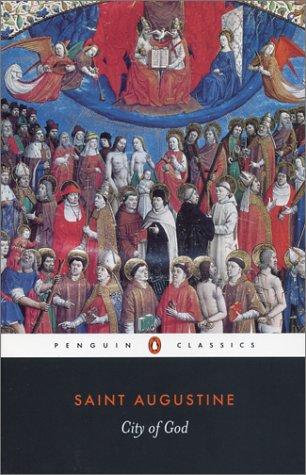
The City of God was written between 413 and 426 CE, prompted by the sack of Rome by the Visigoths in 410. Pagan critics blamed the catastrophe on Rome's abandonment of the old gods in favor of Christianity, and Augustine wrote the book in direct response — first to refute that charge, then to offer a comprehensive alternative account of history, justice, and the human condition. It is his longest and most ambitious work, twenty-two books in all, and the founding text of Christian political thought in the West.
The first ten books are largely defensive. Augustine dismantles the claim that Rome's pagan gods had ever guaranteed the empire's security, marshaling historical examples to show that Rome suffered military disasters and moral degradation long before the Christian era. He is equally critical of the Roman philosophical tradition, arguing that even the Platonists — whom he respects most — cannot supply what the soul actually needs.
What it gets right
- 1.
The two cities — the City of God and the City of Man — are distinguished not by geography or institution but by love: one loves God above all, the other loves self.
- 2.
No earthly empire, including Rome, is equivalent to the Kingdom of God. Augustine warns against confusing any political order with divine sanction.
- 3.
Justice without reference to the true God is, for Augustine, merely organized power. A state that lacks genuine justice is, in his formulation, 'a great robbery.'
What it covers
Who wrote it
Augustine of Hippo (354–430 CE) was a bishop, theologian, and philosopher born in what is now Algeria. His two most influential works are the Confessions and The City of God. Augustine's synthesis of Platonic philosophy and Christian doctrine shaped Western Christianity profoundly, and his thinking on original sin, grace, free will, and political theology continued to be contested through the Reformation and into modernity. He is considered one of the most significant thinkers in the history of Western thought and was declared a Doctor of the Church.
