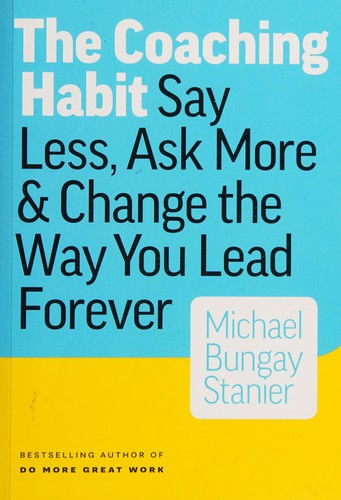
Talk to The Coaching Habit like its author wrote you back.
Get the ideas that fit your life — not generic summaries.
- Chat with the book
- Audiobook-style main ideas
- Adapts to your life and goals
- Helps you take action
The Coaching Habit, in detail
The Coaching Habit is Michael Bungay Stanier's practical guide to asking better questions — specifically, seven questions that he argues should become habitual for any manager who wants to coach rather than just direct. The book is deliberately short and direct, designed to be read in an afternoon and applied the next morning.
The premise is that most managers over-advise and under-question. They jump to solutions before fully understanding the problem, and in doing so they rob people of the experience of solving problems themselves. The result is a loop Stanier calls the "advice trap": the leader gives advice, the team member implements it, the team member comes back with the next problem, the leader gives more advice, and slowly the leader becomes the solution engine for everything and the team becomes dependent.
The seven questions — including "What's on your mind?", "And what else?", "What's the real challenge here for you?", "What do you want?", and the "Lazy Question" ("How can I help?") — are tools for breaking this loop. Each question is designed to do a specific thing: slow down the rush to advice, surface the real issue beneath the presenting issue, shift ownership back to the person being coached, and resist the impulse to rescue.
The question that gets the most attention is "And what else?" — the AWE question. Asking it once after any answer often surfaces information the first answer left out. Asking it twice or three times — without discomfort — often gets to the real issue that wasn't going to come out otherwise. It's genuinely useful and genuinely countercultural in organizations that reward quick decisive answers.
The big ideas
- 1.
The advice trap is the manager's most common failure mode: jumping to solutions before fully understanding the problem, creating dependency rather than capability.
- 2.
Seven questions form the coaching habit: What's on your mind? And what else? What's the real challenge? What do you want? How can I help? If you're saying yes to this, what are you saying no to? What was most useful about this?
- 3.
The 'And what else?' question is the most powerful of the seven. It creates space for the information that wasn't coming out, surfaces the real issue, and resists the impulse to solve before fully hearing.
