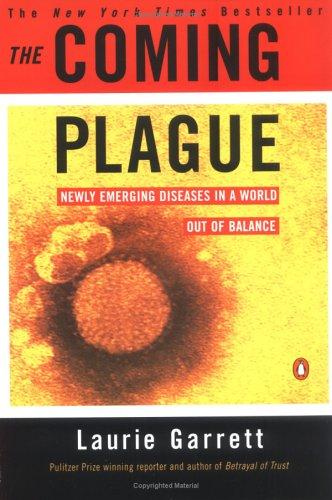
Talk to The Coming Plague like its author wrote you back.
Get the ideas that fit your life — not generic summaries.
- Chat with the book
- Audiobook-style main ideas
- Adapts to your life and goals
- Helps you take action
What it argues
The Coming Plague, published in 1994, is Laurie Garrett's argument that the era of conquest over infectious disease declared in the 1960s was a dangerous illusion, and that the conditions for catastrophic new pandemics were already in place. The book is enormous — nearly 750 pages — and covers an extraordinary range of outbreaks, pathogens, and public health failures across decades and continents. Garrett was a science journalist and had reported on many of the events she describes; the book reads like sustained investigative journalism with an epidemiological framework underneath.
The central argument is ecological and systemic. Garrett traces how deforestation, urbanization, antibiotic overuse, disrupted ecosystems, collapsing public health infrastructure in developing countries, and the HIV epidemic together created the conditions for new and dangerous pathogens to emerge and spread. She is not predicting a single specific event; she is describing a category of risk that follows from the intersection of these trends. The book was published the same year as The Hot Zone, and together they shaped a decade of public conversation about infectious disease risk.
What it gets right
- 1.
The 1960s optimism that infectious disease was essentially conquered was unfounded. The conditions for new epidemic pathogens were intensifying even as that optimism peaked.
- 2.
Emerging infectious diseases follow ecological disruption. Deforestation, urbanization, and habitat fragmentation bring humans into contact with novel pathogens.
- 3.
Antibiotic resistance was already a foreseeable crisis in 1994. Agricultural overuse and economic incentives that discourage new antibiotic development created the trajectory.
What it covers
Who wrote it
Laurie Garrett is an American science journalist and author who spent two decades at Newsday before joining the Council on Foreign Relations as a senior fellow for global health. She is the only journalist to have won all three of journalism's major awards: the Peabody, the Polk, and the Pulitzer Prize for Explanatory Journalism, which she received in 1996 for her reporting on the Ebola outbreak in Zaire. The Coming Plague, her first book, became a foundational text in public health discourse. She also wrote Betrayal of Trust: The Collapse of Global Public Health.
