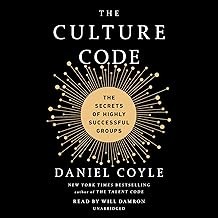
Talk to The Culture Code like its author wrote you back.
Get the ideas that fit your life — not generic summaries.
- Chat with the book
- Audiobook-style main ideas
- Adapts to your life and goals
- Helps you take action
What it argues
The Culture Code is Daniel Coyle's investigation into what separates exceptional team cultures from average ones. After years studying organizations as different as the San Antonio Spurs, the Navy SEALs, the Pixar creative team, and a kindergarten class in Harlem, Coyle concluded that great cultures aren't built on vision statements or motivational speeches. They're built through tiny, repeated signals that answer the most basic human question in a social environment: is it safe to be here?
The book is organized around three skills. The first is building safety — creating the conditions where people feel secure enough to take risks, offer dissenting opinions, and admit mistakes. Coyle draws on Amy Edmondson's psychological safety research but makes it concrete through stories, showing exactly what language and behavior signals safety versus danger. The second skill is sharing vulnerability — specifically the way leaders who admit uncertainty, ask for help, and acknowledge failure create permission structures for everyone else to do the same. The third is establishing purpose through vivid, repeated narrative rather than through corporate values documents.
What it gets right
- 1.
Culture is built through repeated micro-signals that answer the question 'is it safe to be here?' — not through values statements, town halls, or motivational programs.
- 2.
Belonging cues are the small non-verbal signals — attention, proximity, eye contact, humor — that constantly communicate whether a person's presence matters. High-cohesion teams send far more of them.
- 3.
Psychological safety is not about eliminating conflict or criticism. It's about creating the conditions where honest input, risk-taking, and mistakes can occur without social punishment.
What it covers
Who wrote it
Daniel Coyle is an American author and contributing editor to Outside magazine. He is the author of The Talent Code, which examined how high performers across diverse fields develop skill, and Lance Armstrong's War, which preceded Armstrong's doping scandal. The Culture Code draws on years of fieldwork inside high-performing organizations and extends the talent development research of The Talent Code into the realm of group dynamics and organizational culture. He has worked as a special advisor to the Cleveland Indians.
