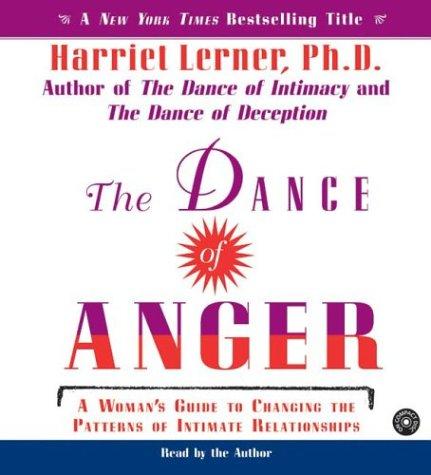
Talk to The Dance of Anger like its author wrote you back.
Get the ideas that fit your life — not generic summaries.
- Chat with the book
- Audiobook-style main ideas
- Adapts to your life and goals
- Helps you take action
What it argues
Harriet Lerner's central argument is that anger is a signal, not a problem. The problem is usually what we do with it — either venting and escalating in ways that change nothing, or swallowing it entirely in ways that produce anxiety, depression, and physical symptoms. Lerner is a psychotherapist who spent decades at the Menninger Foundation, and The Dance of Anger draws on systems theory as much as psychology: the patterns that produce anger aren't located inside individuals but in the relational systems — families, couples, friendships — that people inhabit.
The book introduces the concept of "circular dances" — the predictable, repetitive sequences that happen when people express anger poorly or avoid it entirely. The overfunctioner and underfunctioner. The pursuer and the distancer. The person who explodes and the person who withdraws. These patterns feel driven by the other person, but Lerner's argument is that both parties maintain them, and that changing your part of the dance — not waiting for the other person to change first — is the only reliable way to shift the relationship.
What it gets right
- 1.
Anger is a signal that something is wrong, not an emotion to be managed away. Learning to read it accurately is more useful than learning to suppress it.
- 2.
Most relational anger patterns are circular rather than linear — both parties participate in maintaining them, even when one person appears to be the obvious cause.
- 3.
Venting anger rarely produces change. What produces change is identifying what you actually want and making a clear, non-reactive request for it.
What it covers
Who wrote it
Harriet Lerner is a clinical psychologist who spent more than two decades on the staff of the Menninger Foundation in Topeka, Kansas, and is now in private practice. She has written ten books on women, relationships, and emotional health, including The Dance of Intimacy and The Dance of Connection, which extend the framework introduced in The Dance of Anger. The Dance of Anger, first published in 1985, has sold more than three million copies and remains one of the most widely read books on relational psychology. Lerner has also written on motherhood, apology, and communication more broadly.
