The Dance of Anger by Harriet Lerner is a 1985 psychology book about anger, relationships, self-knowledge. Anger is a signal that something is wrong, not an emotion to be managed away. Learning to read it accurately is more useful than learning to suppress it.
Summary
Harriet Lerner's central argument is that anger is a signal, not a problem. The problem is usually what we do with it — either venting and escalating in ways that change nothing, or swallowing it entirely in ways that produce anxiety, depression, and physical symptoms. Lerner is a psychotherapist who spent decades at the Menninger Foundation, and The Dance of Anger draws on systems theory as much as psychology: the patterns that produce anger aren't located inside individuals but in the relational systems — families, couples, friendships — that people inhabit.
The book introduces the concept of "circular dances" — the predictable, repetitive sequences that happen when people express anger poorly or avoid it entirely. The overfunctioner and underfunctioner. The pursuer and the distancer. The person who explodes and the person who withdraws. These patterns feel driven by the other person, but Lerner's argument is that both parties maintain them, and that changing your part of the dance — not waiting for the other person to change first — is the only reliable way to shift the relationship.
Much of the book is made up of case studies, most of them drawn from Lerner's clinical work with women navigating work, marriage, and family systems. The framing around women was deliberate and ahead of its time when the book was published in 1985: women had been taught that anger was unfeminine, that expressing it directly would damage their relationships, and that self-sacrifice was the appropriate expression of love. Lerner challenges each of those assumptions. At the same time, many of the dynamics she describes are not gender-specific, and the book reads as useful for anyone regardless of gender.
What Lerner emphasizes is the difficulty of change, not just the possibility of it. When one person in a system changes their behavior, the system typically pushes back. Other people escalate, plead, or find new ways to restore the old pattern. She calls this a "change-back" reaction, and she prepares readers to expect it rather than interpret it as evidence that the change isn't working. The goal isn't resolution of conflict — it's the ability to stay clear-headed and boundaried while remaining genuinely in relationship.
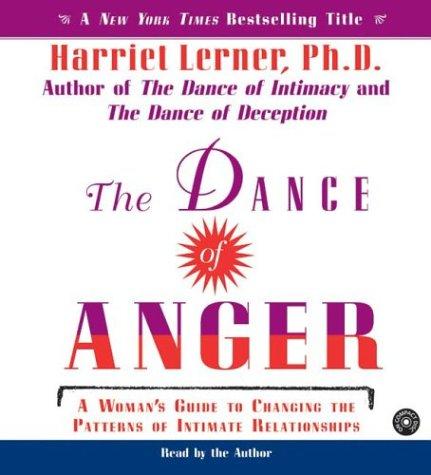
Talk to The Dance of Anger like its author wrote you back.
Get the ideas that fit your life — not generic summaries.
- Chat with the book
- Audiobook-style main ideas
- Adapts to your life and goals
- Helps you take action
Key takeaways
- 1.
Anger is a signal that something is wrong, not an emotion to be managed away. Learning to read it accurately is more useful than learning to suppress it.
- 2.
Most relational anger patterns are circular rather than linear — both parties participate in maintaining them, even when one person appears to be the obvious cause.
- 3.
Venting anger rarely produces change. What produces change is identifying what you actually want and making a clear, non-reactive request for it.
- 4.
Overfunctioning and underfunctioning are a complementary pair. The more competently one person handles everything, the more the other person becomes dependent and helpless — and both maintain the pattern.
- 5.
When you change your behavior in a relationship, expect a 'change-back' reaction. The system will push hard to restore the old pattern before it accepts the new one.
- 6.
The goal is not to win arguments or produce apologies. The goal is to clarify your position, maintain it calmly, and stay in relationship with the other person while doing so.
- 7.
Triangling — pulling a third person into a two-person conflict — relieves short-term tension but prevents the original relationship from achieving genuine clarity.
- 8.
Lerner distinguishes between feeling angry and fighting. The first is information; the second is usually a way of discharging the feeling without addressing what caused it.
Discussion questions
Use these on your own, with a book club, or as chat starters in Superbook. Book club version, ready to copy or print →
- 1.
Lerner says anger is a signal, not a problem. What do you think your own anger has been trying to signal to you in a recent situation?
- 2.
The book describes over-functioning and under-functioning as a paired pattern. Which role are you more likely to fall into, and what does it cost you?
- 3.
Think of a relationship where a circular dance is running. What would your part of the dance look like if you changed it, and what would you expect the other person to do?
- 4.
Lerner says most people either escalate or go silent when angry. Which do you tend to do, and what effect does it actually have on the situation?
- 5.
The 'change-back' reaction is one of the book's most important ideas. Have you experienced it when you've tried to change something in a relationship? How did you interpret it at the time?
- 6.
The book was written primarily for women in 1985. Does the analysis still feel relevant and applicable regardless of gender, or does the framing limit its usefulness?
- 7.
Lerner argues that triangling relieves anxiety but prevents resolution. Where do you see this pattern operating in your own relationships?
- 8.
What would it look like to express anger 'well' in a relationship that matters to you — directly, without blaming, and without backing down?
- 9.
Lerner spends a chapter on anger in family-of-origin relationships. How much do you think the patterns you learned in your original family shape how you handle anger now?
- 10.
The book distinguishes between staying in a relationship and staying stuck in a pattern. What's the difference, and how would you know which one you're doing?
- 11.
What's a situation from your own life where expressing anger more clearly might have changed an outcome — either professionally or personally?
Themes
Frequently asked questions
-
Is The Dance of Anger still relevant?
Yes. The relationship dynamics it describes — overfunctioning, triangling, change-back reactions — are not time-bound. The framing around women's anger has dated slightly, but the underlying psychology and systems theory are as applicable now as in 1985.
-
Who should read The Dance of Anger?
Anyone who finds themselves stuck in a repeating relational conflict where nothing seems to change despite their efforts. Particularly useful for people who tend to either suppress anger or express it explosively without getting what they actually want from the situation.
-
What is the main idea of the book?
That anger operates in relational systems, not just in individuals, and that changing your own part of a circular pattern — without waiting for the other person to change first — is how relationships actually shift.
-
Is this a therapy book or a self-help book?
Both. It draws on family systems therapy but is written for general readers, with case studies and practical applications rather than clinical jargon. Many therapists recommend it to clients as a companion to therapy.
-
How long does it take to read The Dance of Anger?
Around four to five hours at average reading pace. The case studies are central to the argument, so skimming them shortchanges the book. Most readers find it most useful when read slowly, with reflection between chapters.
Similar books

Emotional Intelligence
Daniel Goleman

How Emotions Are Made: The Secret Life of the Brain
Lisa Feldman Barrett
A General Theory of Love
Thomas Lewis, Fari Amini, and Richard Lannon
The Seven Principles for Making Marriage Work
John Gottman and Nan Silver
