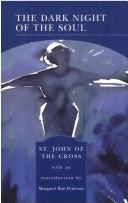
Talk to Dark Night of the Soul like its author wrote you back.
Get the ideas that fit your life — not generic summaries.
- Chat with the book
- Audiobook-style main ideas
- Adapts to your life and goals
- Helps you take action
What it argues
Dark Night of the Soul is a systematic commentary on a short poem John of the Cross wrote while imprisoned in Toledo in 1577. John — a Spanish Carmelite friar and contemporary of Teresa of Ávila — composed the poem during nine months of confinement under brutal conditions. The prose commentary, written in the 1580s, analyzes the poem's imagery line by line to describe what he understands as two stages of spiritual purification: the night of the senses and the night of the spirit. Together, these constitute the "dark night" — a period of dryness, confusion, and apparent abandonment that John believes is actually the primary means by which God purifies the soul and draws it toward union.
The first book addresses the night of the senses. John identifies seven ways that spiritual beginners typically indulge their attachment to spiritual consolations — what he calls the spiritual equivalents of the classic seven deadly sins. The spiritually proud person compares their practice favorably to others; the spiritually slothful person gives up when prayer becomes uncomfortable. John argues that God withdraws consolations precisely to free the person from dependence on good feeling and to begin the deeper work. The diagnosis is pointed: he suggests that most people who experience dryness in prayer are going through a dark night, not failing at their practice.
What it gets right
- 1.
The dark night is not spiritual failure but spiritual progress. God withdraws consolations to free the soul from dependence on them and to begin deeper purification.
- 2.
John identifies two stages: the night of the senses (purification of attachment to spiritual feelings) and the night of the spirit (purification of the intellect and will).
- 3.
Spiritual beginners often exhibit the spiritual equivalents of pride, sloth, and avarice — clinging to consolations, comparing their progress to others, abandoning practices when they become dry.
What it covers
Who wrote it
John of the Cross (1542–1591) was a Spanish Carmelite friar, mystic, and poet who worked closely with Teresa of Ávila on the reform of the Carmelite order. He was imprisoned for nine months by members of the unreformed order in 1577 — the period during which he wrote the poem that Dark Night of the Soul eventually comments on. His other major works include The Ascent of Mount Carmel, The Spiritual Canticle, and The Living Flame of Love. He was canonized in 1726 and declared a Doctor of the Church in 1926. His combination of precise philosophical analysis and lyric intensity is exceptional in the mystical tradition.
