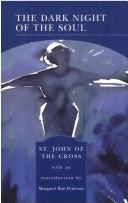
Dark Night of the Soul by John of the Cross is a 1582 religion & spirituality book about spiritual purification, suffering, contemplation. The dark night is not spiritual failure but spiritual progress. God withdraws consolations to free the soul from dependence on them and to begin deeper purification.
Summary
Dark Night of the Soul is a systematic commentary on a short poem John of the Cross wrote while imprisoned in Toledo in 1577. John — a Spanish Carmelite friar and contemporary of Teresa of Ávila — composed the poem during nine months of confinement under brutal conditions. The prose commentary, written in the 1580s, analyzes the poem's imagery line by line to describe what he understands as two stages of spiritual purification: the night of the senses and the night of the spirit. Together, these constitute the "dark night" — a period of dryness, confusion, and apparent abandonment that John believes is actually the primary means by which God purifies the soul and draws it toward union.
The first book addresses the night of the senses. John identifies seven ways that spiritual beginners typically indulge their attachment to spiritual consolations — what he calls the spiritual equivalents of the classic seven deadly sins. The spiritually proud person compares their practice favorably to others; the spiritually slothful person gives up when prayer becomes uncomfortable. John argues that God withdraws consolations precisely to free the person from dependence on good feeling and to begin the deeper work. The diagnosis is pointed: he suggests that most people who experience dryness in prayer are going through a dark night, not failing at their practice.
The second book addresses the night of the spirit — the deeper and more severe purification. Here the soul is stripped of its habitual ways of knowing and loving God. The experience is described as a darkness not because God is absent but because the divine light is too intense for the soul's current capacity, the way excessive brightness appears as darkness to damaged eyes. John draws on scholastic philosophy to explain why this is necessary: the soul must be emptied of its own projections and habits to receive a more direct knowledge of God.
The book is philosophically demanding but not inaccessible. John writes with precision and compassion — he clearly knows the territory from experience, not from theory alone. The concept of the "dark night" has passed into the general cultural vocabulary as a description of any period of deep desolation. John's original meaning is narrower and more specific: it is not all suffering, but a particular kind of suffering that accompanies spiritual growth. The distinction matters for how the experience is interpreted and endured.
Talk to Dark Night of the Soul like its author wrote you back.
Get the ideas that fit your life — not generic summaries.
- Chat with the book
- Audiobook-style main ideas
- Adapts to your life and goals
- Helps you take action
Key takeaways
- 1.
The dark night is not spiritual failure but spiritual progress. God withdraws consolations to free the soul from dependence on them and to begin deeper purification.
- 2.
John identifies two stages: the night of the senses (purification of attachment to spiritual feelings) and the night of the spirit (purification of the intellect and will).
- 3.
Spiritual beginners often exhibit the spiritual equivalents of pride, sloth, and avarice — clinging to consolations, comparing their progress to others, abandoning practices when they become dry.
- 4.
Darkness in prayer does not mean absence. John argues the divine presence becomes more intense, not less — the soul's capacity is what is limited, not God's proximity.
- 5.
The test of whether dryness is a dark night (rather than distraction or sin) is whether the person retains a general, undifferentiated desire for God even when no particular prayer brings satisfaction.
- 6.
Detachment is not indifference. John wants the soul freed from disordered attachment to things — including spiritual things — not from care or love.
- 7.
The metaphor of fire purifying gold runs through the book: the process destroys what is impure, which can feel like destruction of the self, but what survives is more fully itself.
- 8.
John's framework applies to mystical experience but also illuminates secular experiences of meaningful loss — grief, failure, the collapse of certainties — where something necessary is being stripped away.
Discussion questions
Use these on your own, with a book club, or as chat starters in Superbook. Book club version, ready to copy or print →
- 1.
John distinguishes the dark night from ordinary spiritual dryness caused by distraction or sin. How would you tell the difference from the inside?
- 2.
His diagnosis of 'spiritual beginners' — pride in practice, possessiveness of consolations — is sharp and specific. Do any of those patterns resonate with how you approach serious endeavors beyond prayer?
- 3.
John says God withdraws good feelings in prayer to free the person from dependence on feeling. What is the secular equivalent of this — the withdrawal of what we depend on that might actually be productive?
- 4.
The book argues that apparent darkness can be excessive light. Have you experienced a situation where confusion was actually the result of too much clarity — something too large to process rather than a void?
- 5.
John insists that passive suffering accomplishes more than active striving at a certain stage. Does that claim sit comfortably with your instincts about what makes progress happen?
- 6.
The concept of the 'dark night' has been borrowed widely in popular culture to describe any serious difficulty. Does that broader use honor or distort what John means?
- 7.
Which of John's seven 'spiritual sins' — spiritual pride, avarice, lust, wrath, gluttony, envy, sloth — do you think is most common in contemporary life, spiritual or otherwise?
- 8.
John wrote the original poem while imprisoned under harsh conditions by his own religious order. Does knowing that context change how you read the book?
- 9.
The second night — night of the spirit — is described as stripping away habitual ways of knowing God. What would it mean to lose your habitual ways of making sense of the world, and what might survive?
- 10.
John is confident that the dark night is purposive — it leads somewhere. What is required to hold that confidence when the experience itself provides no evidence of direction?
- 11.
How does John's account of suffering-as-purification compare to secular accounts of post-traumatic growth or the value of adversity?
- 12.
If you had to describe the 'dark night' concept to someone who had never heard it, in entirely non-religious terms, how would you do it?
Themes
Frequently asked questions
-
What does 'dark night of the soul' actually mean?
John uses it to describe a specific spiritual experience: God withdrawing consolations from a maturing soul so it can be purified of dependence on them. It is not all suffering or depression, but a particular kind of interior desolation that he believes is purposive and ultimately transformative.
-
Is Dark Night of the Soul about depression?
Not as John intended it. He is describing a spiritual process, not a clinical condition. However, the phenomenological overlap between what he describes and certain experiences of depression has made the concept useful beyond its original religious context. John would distinguish them by asking whether the person retains a non-specific desire for God even in the dryness.
-
Do I need to read the poem first?
The prose commentary is largely self-contained, but reading the eight-stanza poem first gives the book its proper shape. John quotes from it line by line and his commentary makes more sense if you have the arc of the poem in mind.
-
How does Dark Night of the Soul relate to The Interior Castle?
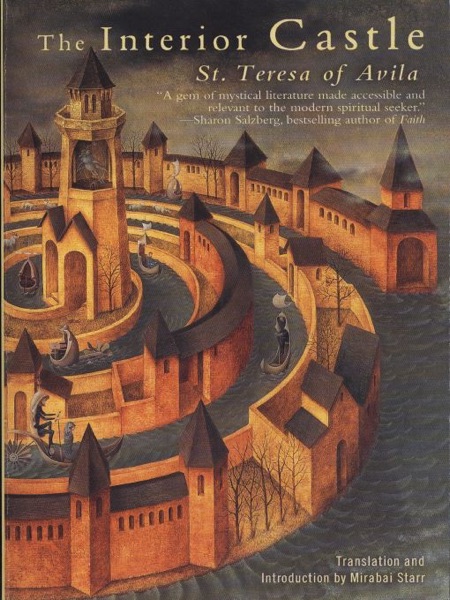
They describe the same journey from different vantage points. Teresa's Interior Castle is more hopeful and map-like; John's Dark Night is more analytic about the painful stages. They are complementary, and reading both gives a fuller picture than either alone.
-
Is this book only for Christians?
The framework is explicitly Christian and Catholic, but the psychological precision of John's account — the dynamics of consolation and desolation, attachment and detachment, the productive role of suffering — resonates across traditions and has been read profitably outside Christianity.