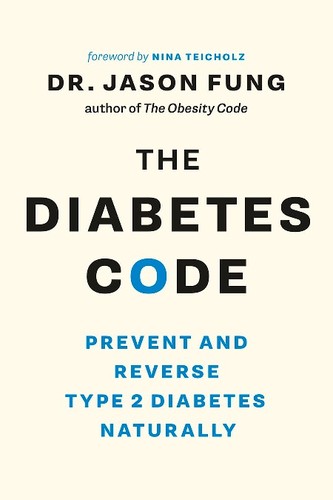
Talk to The Diabetes Code like its author wrote you back.
Get the ideas that fit your life — not generic summaries.
- Chat with the book
- Audiobook-style main ideas
- Adapts to your life and goals
- Helps you take action
What it argues
The Diabetes Code is Jason Fung's argument that type 2 diabetes is a dietary disease, not a genetic destiny, and that it is therefore reversible through the right interventions. Fung, a nephrologist who treats kidney failure caused largely by diabetic complications, became frustrated watching patients progress along what medicine treated as an inevitable decline. His book is an attempt to explain why the standard treatment of medicating blood sugar without addressing its underlying cause is inadequate — and often counterproductive.
The core argument is about insulin. Fung contends that type 2 diabetes is fundamentally a disease of excess insulin and insulin resistance, not merely elevated blood glucose. When cells are chronically overloaded with glucose and insulin, they protect themselves by becoming resistant. The body responds by producing more insulin, which worsens resistance, driving a cycle that eventually overwhelms the pancreas. Most conventional treatments lower blood glucose directly while leaving the underlying insulin excess untouched — or even make it worse by adding exogenous insulin.
What it gets right
- 1.
Type 2 diabetes is driven by chronically high insulin and insulin resistance, not by blood glucose elevation alone. Treating only the symptom leaves the cause untouched.
- 2.
Dietary carbohydrates, especially refined carbohydrates and sugar, are the primary driver of insulin demand. Reducing them directly lowers the disease burden.
- 3.
Fasting — intermittent or extended — lowers insulin levels more effectively than caloric restriction because it removes all food stimulus rather than spreading smaller meals across the day.
What it covers
Who wrote it
Jason Fung is a Canadian nephrologist and clinical researcher who practices in Toronto. He trained at the University of Toronto and UCLA and founded the Intensive Dietary Management program, which applies low-carbohydrate and fasting protocols to obesity and type 2 diabetes. He is the author of several books including The Obesity Code and The Complete Guide to Fasting, and has published research and commentary in peer-reviewed journals. His work has been influential in popularizing therapeutic fasting among clinicians and patients.
