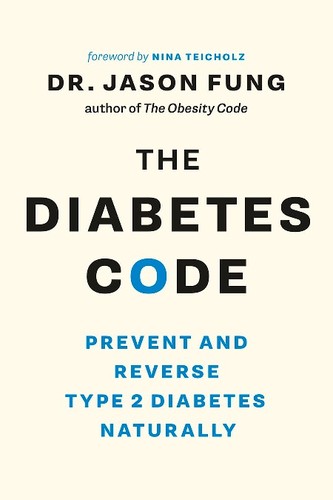
The Diabetes Code by Jason Fung is a 2018 health book about insulin resistance, metabolic health, dietary intervention. Type 2 diabetes is driven by chronically high insulin and insulin resistance, not by blood glucose elevation alone. Treating only the symptom leaves the cause untouched.
Summary
The Diabetes Code is Jason Fung's argument that type 2 diabetes is a dietary disease, not a genetic destiny, and that it is therefore reversible through the right interventions. Fung, a nephrologist who treats kidney failure caused largely by diabetic complications, became frustrated watching patients progress along what medicine treated as an inevitable decline. His book is an attempt to explain why the standard treatment of medicating blood sugar without addressing its underlying cause is inadequate — and often counterproductive.
The core argument is about insulin. Fung contends that type 2 diabetes is fundamentally a disease of excess insulin and insulin resistance, not merely elevated blood glucose. When cells are chronically overloaded with glucose and insulin, they protect themselves by becoming resistant. The body responds by producing more insulin, which worsens resistance, driving a cycle that eventually overwhelms the pancreas. Most conventional treatments lower blood glucose directly while leaving the underlying insulin excess untouched — or even make it worse by adding exogenous insulin.
The solution Fung proposes is two-pronged: significantly reduce dietary carbohydrates, particularly refined ones, and use intermittent or extended fasting to allow insulin levels to drop. He draws on the physiology of fasting to explain why it can achieve what drug treatment cannot — giving cells a period of genuine rest from insulin stimulation long enough to restore sensitivity. He also addresses the dietary advice that has dominated medicine for decades, arguing that the low-fat, high-carbohydrate guidelines promoted since the 1970s have driven the diabetes epidemic.
The book is genuinely useful as an explanation of metabolic disease, and Fung writes clearly without oversimplifying the physiology. The clinical anecdotes are often striking. The weakness is a tendency toward polemical framing that can make nuanced questions feel more settled than they are. Readers who are pre-diabetic, diabetic, or have metabolic syndrome will find the framework actionable. Anyone making changes to diabetes medication should work with a clinician — some of Fung's protocols require supervised monitoring.
Talk to The Diabetes Code like its author wrote you back.
Get the ideas that fit your life — not generic summaries.
- Chat with the book
- Audiobook-style main ideas
- Adapts to your life and goals
- Helps you take action
Key takeaways
- 1.
Type 2 diabetes is driven by chronically high insulin and insulin resistance, not by blood glucose elevation alone. Treating only the symptom leaves the cause untouched.
- 2.
Dietary carbohydrates, especially refined carbohydrates and sugar, are the primary driver of insulin demand. Reducing them directly lowers the disease burden.
- 3.
Fasting — intermittent or extended — lowers insulin levels more effectively than caloric restriction because it removes all food stimulus rather than spreading smaller meals across the day.
- 4.
Conventional calorie-restriction diets often fail because the body adapts by lowering metabolic rate. Fasting with adequate refeeding does not produce the same adaptive response.
- 5.
The low-fat dietary guidelines of the 1970s and 1980s inadvertently promoted high-carbohydrate eating, which Fung argues has been a major driver of rising obesity and diabetes rates.
- 6.
Many patients on insulin therapy for type 2 diabetes experience weight gain, which worsens insulin resistance — a self-reinforcing cycle that medication alone cannot break.
- 7.
Fatty liver, often caused by fructose metabolism, plays a central role in the development of insulin resistance and can precede a diabetes diagnosis by years.
- 8.
Reversal of type 2 diabetes — restoration of normal blood glucose without medication — is achievable in a significant proportion of patients through dietary and fasting interventions.
Discussion questions
Use these on your own, with a book club, or as chat starters in Superbook. Book club version, ready to copy or print →
- 1.
Fung argues that treating blood sugar without addressing insulin is like mopping the floor under a running faucet. How does this metaphor change the way you think about chronic disease management in general?
- 2.
The book implicates dietary guidelines promoted by governments and health agencies. How much weight should individuals give to official nutritional advice, and how should they evaluate it critically?
- 3.
Fung is critical of pharmaceutical treatment of type 2 diabetes as a first-line intervention. What responsibility do patients, doctors, and healthcare systems each bear for the way diabetes is currently treated?
- 4.
Intermittent fasting is central to Fung's protocol. What are the practical barriers to adopting it, and who might it genuinely not suit?
- 5.
The book is written by a clinician, not an academic researcher. How does that affect how you weigh its claims against those in peer-reviewed literature?
- 6.
Fung describes patients who reversed their diabetes diagnoses. What would it take for such outcomes to become a realistic part of standard care rather than individual exceptions?
- 7.
What role does the food industry play in the rise of type 2 diabetes, and is individual dietary choice a sufficient response to a structural problem?
- 8.
How does the framing of type 2 diabetes as reversible change the psychology of patients who have been told it is a progressive, manageable condition?
- 9.
Fung distinguishes type 1 from type 2 diabetes clearly. Do you think the current cultural and medical treatment of diabetes conflates the two in unhelpful ways?
- 10.
The low-fat era is presented as a nutritional mistake with large-scale consequences. What other widely accepted health beliefs might we look back on with similar skepticism?
- 11.
Who in your life has type 2 diabetes or is pre-diabetic? After reading the book, how would you approach a conversation with them about what you learned?
- 12.
Fung says the disease can be reversed, but reversal requires lifestyle changes that are harder than taking a pill. What makes sustained behavioral change so much more difficult than medication adherence?
Themes
Frequently asked questions
-
Is The Diabetes Code worth reading if I don't have diabetes?
Yes, if you're interested in metabolic health, insulin resistance, or the history of nutritional science. The explanation of how insulin resistance develops is useful context for understanding obesity, fatty liver, and cardiovascular risk even before a diabetes diagnosis.
-
How long does it take to read The Diabetes Code?
Around four to five hours at an average reading pace. The book is accessible and avoids dense academic language, though some chapters on physiology reward slow reading.
-
What is Jason Fung's main claim in The Diabetes Code?
That type 2 diabetes is caused by excess insulin and insulin resistance rather than by genetics, and that it can be reversed through carbohydrate restriction and fasting rather than managed indefinitely with medication.
-
Can fasting really reverse type 2 diabetes?
Evidence from clinical trials and case series supports meaningful improvement and in some cases full remission of type 2 diabetes with very-low-calorie diets and fasting protocols. Fung's claims align with this evidence base, though he presents it with more certainty than the research literature does. Medical supervision is essential.
-
Who shouldn't read The Diabetes Code?
People who are easily swayed by confident clinical opinion without wanting to evaluate the underlying evidence carefully. Fung's framework is compelling but he is also a polemicist, and some of his claims about dietary fat and pharmaceutical industry motives benefit from independent verification.