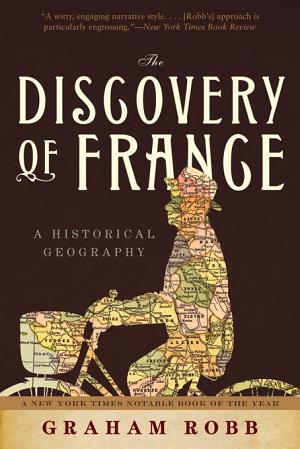
Talk to The Discovery of France: A Historical Geography from the Revolution to the First World War like its author wrote you back.
Get the ideas that fit your life — not generic summaries.
- Chat with the book
- Audiobook-style main ideas
- Adapts to your life and goals
- Helps you take action
What it argues
Graham Robb's premise is audacious: France was not discovered until relatively recently, and even then, most of what was discovered was quickly erased. In the century between the Revolution and the First World War, an ancient provincial world of Celtic dialects, local religions, seasonal nomadism, and landscape-specific customs was first mapped and catalogued by the French state, and then systematically dismantled in the name of national unity. Robb's book is both a history of that world and a lament for its disappearance.
The research behind the book is extraordinary. Robb cycled 14,000 miles across France over several years, following the routes of the surveyors, botanists, and army engineers who mapped the country in the nineteenth century. What he found in the archives contradicts almost everything the dominant narrative of French national identity assumes. Most French people in 1800 did not speak French as their first language. Many did not know what France was. The "hexagon" of French national territory was not a stable reality but a construction that required enormous state effort, including military conscription, mandatory schooling, and the deliberate suppression of regional languages, to make real.
What it gets right
- 1.
In 1800, most French people did not speak French as their first language. The 'French nation' as a cultural reality was a nineteenth-century construction that required deliberate state effort to create.
- 2.
France before the Revolution and for decades after was a patchwork of micro-regions with distinct dialects, customs, local religions, and calendars that had more in common with neighboring regions across modern borders than with the central state.
- 3.
The creation of France required military conscription, compulsory schooling, standardized weights and measures, and the systematic suppression of regional languages — processes that destroyed the diversity they were mapping at the same time.
What it covers
Who wrote it
Graham Robb is a British historian and biographer who has written on Victor Hugo, Rimbaud, Balzac, and the ancient Celts. The Discovery of France won the Duff Cooper Prize and the Royal Geographical Society's Geographical Award in 2008. His subsequent books include The Ancient Paths, which investigates Celtic geographic knowledge, and Parisians, a narrative history of the city. He lives in France and writes with equal command of French and English sources. His background as a literary biographer gives his historical writing an unusually close attention to voice, place, and the texture of individual lives within large historical forces.
