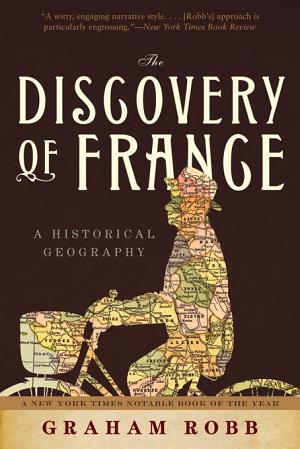
The Discovery of France: A Historical Geography from the Revolution to the First World War by Graham Robb is a 2007 history book about france, national identity, geography. In 1800, most French people did not speak French as their first language. The 'French nation' as a cultural reality was a nineteenth-century construction that required deliberate state effort to create.
Summary
Graham Robb's premise is audacious: France was not discovered until relatively recently, and even then, most of what was discovered was quickly erased. In the century between the Revolution and the First World War, an ancient provincial world of Celtic dialects, local religions, seasonal nomadism, and landscape-specific customs was first mapped and catalogued by the French state, and then systematically dismantled in the name of national unity. Robb's book is both a history of that world and a lament for its disappearance.
The research behind the book is extraordinary. Robb cycled 14,000 miles across France over several years, following the routes of the surveyors, botanists, and army engineers who mapped the country in the nineteenth century. What he found in the archives contradicts almost everything the dominant narrative of French national identity assumes. Most French people in 1800 did not speak French as their first language. Many did not know what France was. The "hexagon" of French national territory was not a stable reality but a construction that required enormous state effort, including military conscription, mandatory schooling, and the deliberate suppression of regional languages, to make real.
The book's method is accumulation: hundreds of specific details, customs, place names, occupations, and beliefs drawn from local histories, folklore collections, and prefectural reports. The world Robb reconstructs is not the France of Paris and the great chateaux. It is the France of the transhumant shepherds of the Pyrenees, the seasonal workers who walked hundreds of miles to work, the villages that worshipped local saints whose names had never been heard in Rome, and the children raised in seasonal isolation so extreme that the state's agents found them barely socialized. This is not a romantic portrait — Robb is clear that the old world was often brutal and its poverty desperate — but it is a corrective to a mythology of seamless national culture.
What makes The Discovery of France a pleasure to read alongside its argument is Robb's prose, which is dry, witty, and occasionally startling. He is a literary biographer by training — he has written on Victor Hugo, Rimbaud, and Balzac — and he brings a novelist's eye for the telling detail to historical geography. The book won the Duff Cooper Prize and the Royal Geographical Society's Geographical Award and has been widely recognized as one of the most original works of French history in recent decades.
Talk to The Discovery of France: A Historical Geography from the Revolution to the First World War like its author wrote you back.
Get the ideas that fit your life — not generic summaries.
- Chat with the book
- Audiobook-style main ideas
- Adapts to your life and goals
- Helps you take action
Key takeaways
- 1.
In 1800, most French people did not speak French as their first language. The 'French nation' as a cultural reality was a nineteenth-century construction that required deliberate state effort to create.
- 2.
France before the Revolution and for decades after was a patchwork of micro-regions with distinct dialects, customs, local religions, and calendars that had more in common with neighboring regions across modern borders than with the central state.
- 3.
The creation of France required military conscription, compulsory schooling, standardized weights and measures, and the systematic suppression of regional languages — processes that destroyed the diversity they were mapping at the same time.
- 4.
Seasonal nomadism was widespread in pre-industrial France. Large portions of the rural population moved annually — to work, to beg, or to follow livestock — in patterns invisible to Paris-centered histories.
- 5.
The 'natural' landscapes of France were heavily managed by practices that modern conservation has in some cases preserved and in others destroyed. The relationship between human management and nature Robb describes complicates simple narratives of rural tradition.
- 6.
The state's discovery of France — through census, survey, and military mapping — coincided with its systematic alteration of what it found. The act of knowing the country was inseparable from the act of standardizing it.
- 7.
National mythology suppresses the regional complexity that complicates it. The story France tells about itself as an ancient unified culture is not a description of history but a goal that was only partially achieved.
Discussion questions
Use these on your own, with a book club, or as chat starters in Superbook. Book club version, ready to copy or print →
- 1.
Robb argues that France was constructed rather than discovered. Does the same argument apply to the national identity of any country you know well?
- 2.
The book describes the destruction of regional languages and cultures as a deliberate state project. Was that project a necessary cost of modernity, or a loss that could have been avoided?
- 3.
What does it mean that the France of Victor Hugo and Balzac was writing about a country that most of its inhabitants didn't yet experience as their own?
- 4.
Robb cycled 14,000 miles across France to research this book. Does that method — physical immersion in landscape and local archives — produce a kind of historical knowledge that more conventional research cannot?
- 5.
The book's micro-regions — with their specific dialects, saints, and customs — have mostly vanished. Is the disappearance of that diversity simply the cost of modernity, or is something important still recoverable?
- 6.
The French state created France partly by suppressing what it found. Are there analogous processes happening today — ways in which documentation and standardization erase what they measure?
- 7.
How does Robb's France compare to the France you knew or imagined before reading the book? What surprised you most?
- 8.
He is a literary biographer writing history. Does his background make the book better or does it introduce blind spots that a professional historian might avoid?
- 9.
The transhumant shepherds, the seasonal migrants, the locally practicing semi-Christians Robb describes — what would it take to recover knowledge of lives that left so few records?
- 10.
Robb is ambivalent about nostalgia but clearly finds the lost world he describes moving. Is that tension sustainable, or does it require him to have it both ways?
- 11.
What is a version of this story — the gap between an official national narrative and a more complex regional reality — that you think most needs telling in your own country?
Themes
Frequently asked questions
-
Is The Discovery of France worth reading?
Yes, particularly if you have some prior interest in France or French history. It is not a conventional narrative — it accumulates detail rather than following a chronological argument — but the picture it builds is genuinely revelatory and Robb's prose is a pleasure.
-
How long does it take to read The Discovery of France?
Around seven to eight hours at average reading pace. At around 380 pages, it moves faster than its density of detail suggests, partly because Robb's writing is entertaining and the chapters are organized thematically rather than chronologically.
-
What period does the book cover?
Primarily 1789 to 1914 — the Revolution to the First World War — though Robb ranges back into earlier centuries when the argument requires it. The subtitle, 'A Historical Geography from the Revolution to the First World War,' is accurate.
-
Is this a book about Paris?
Almost entirely the opposite. Robb explicitly sets out to write a history of the France that Paris overlooked. Paris appears mainly as the distant authority that was trying to understand and standardize the provincial world Robb describes.
-
Who should read The Discovery of France?
Anyone interested in French history, the history of nation-building, or historical geography. It is also valuable for readers interested in how national identities are constructed and what they erase in the process.
Similar books
Sapiens: A Brief History of Humankind
Yuval Noah Harari
Citizens: A Chronicle of the French Revolution
Simon Schama

Guns, Germs, and Steel
Jared Diamond
Alexander Hamilton
Ron Chernow
