Talk to The Dragons of Eden like its author wrote you back.
Get the ideas that fit your life — not generic summaries.
- Chat with the book
- Audiobook-style main ideas
- Adapts to your life and goals
- Helps you take action
What it argues
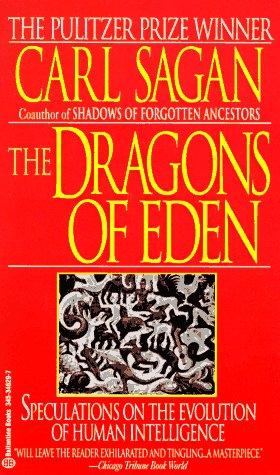
The Dragons of Eden, which won the Pulitzer Prize for General Nonfiction in 1978, is Carl Sagan's exploration of the evolution and nature of human intelligence. Sagan approaches the brain from multiple directions — evolutionary biology, comparative anatomy, neurophysiology, and psychology — to ask how we got our minds and what their structure reveals about our nature.
The book's central organizing framework is Paul MacLean's triune brain hypothesis: the idea that the human brain is, in effect, three brains stacked on top of one another — the reptilian complex (controlling basic survival behaviors), the limbic system (controlling emotion and memory, evolved in early mammals), and the neocortex (controlling higher cognition, strongly developed in primates and most fully in humans). Sagan uses this framework to explore the evolutionary roots of human behavior: why we are simultaneously rational and driven by impulse, why ancient fears and hierarchical instincts persist in people who know better.
What it gets right
- 1.
Human intelligence is the product of evolutionary pressures acting on primate nervous systems over millions of years; it is continuous with animal cognition rather than categorically separate from it.
- 2.
The triune brain model — reptilian complex, limbic system, neocortex — suggests that human behavior reflects multiple evolutionary layers with different priorities that do not always agree.
- 3.
The neocortex, responsible for analytical thinking and long-range planning, is disproportionately large in humans compared to other primates and may be the primary biological basis for human technological and cultural achievement.
What it covers
Who wrote it
Carl Sagan (1934–1996) was an American astronomer, cosmologist, and science communicator at Cornell University. He contributed to planetary science, served as a scientific advisor to NASA, and was among the most widely recognized science communicators of the twentieth century. The Dragons of Eden won the Pulitzer Prize in 1978. His television series Cosmos and his novel Contact, later filmed, brought science to popular audiences worldwide. He was a consistent advocate for scientific skepticism and nuclear disarmament until his death in 1996.
