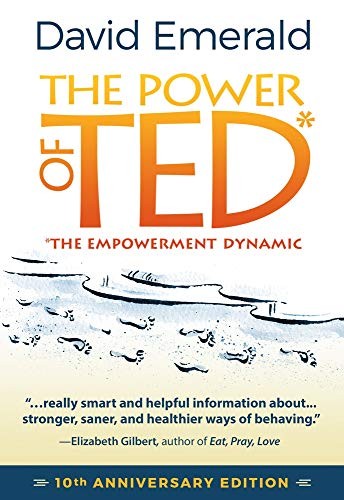
Talk to The Power of TED like its author wrote you back.
Get the ideas that fit your life — not generic summaries.
- Chat with the book
- Audiobook-style main ideas
- Adapts to your life and goals
- Helps you take action
What it argues
The Power of TED (The Empowerment Dynamic) is David Emerald's fable-based framework for escaping what psychologist Stephen Karpman called the Drama Triangle. In Karpman's model, people default to one of three reactive roles: Victim (I'm helpless), Persecutor (it's your fault), and Rescuer (let me fix you). Emerald's contribution is to name the opposite, empowerment-based roles and show how to consciously shift into them.
The framework presents three alternative roles: Creator (focused on what you want, not what you fear), Challenger (helping others grow through accountability, not blame), and Coach (asking empowering questions rather than solving for others). Emerald illustrates these through a fictional story about David, a man stuck in a Victim orientation across his career and relationships, who gradually learns to reorient himself as a Creator.
What it gets right
- 1.
The Drama Triangle locks people into three reactive roles: Victim, Persecutor, and Rescuer. All three are disempowering, even the Rescuer.
- 2.
The Empowerment Dynamic offers three alternative roles: Creator, Challenger, and Coach. Each is oriented toward growth rather than reaction.
- 3.
Creators focus on outcomes — what they actually want — rather than on problems and what they are afraid of.
What it covers
Who wrote it
David Emerald is an author, consultant, and coach based in the United States who spent decades working in organizational development before distilling his approach into The Power of TED. He co-founded the Center for The Empowerment Dynamic, which offers training and certification in the TED framework for coaches, leaders, and teams. The book was originally self-published and built its readership largely through word of mouth in coaching and HR communities before reaching a broader audience.
