Talk to The Power of TED like its author wrote you back.
Get the ideas that fit your life — not generic summaries.
- Chat with the book
- Audiobook-style main ideas
- Adapts to your life and goals
- Helps you take action
The Power of TED, in detail
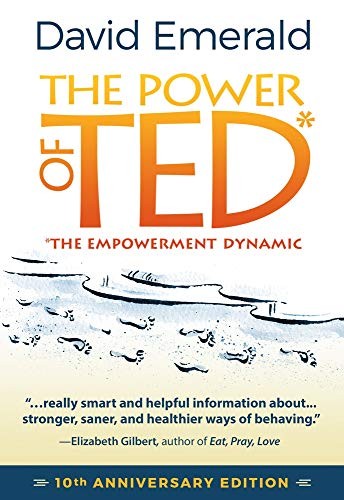
The Power of TED (The Empowerment Dynamic) is David Emerald's fable-based framework for escaping what psychologist Stephen Karpman called the Drama Triangle. In Karpman's model, people default to one of three reactive roles: Victim (I'm helpless), Persecutor (it's your fault), and Rescuer (let me fix you). Emerald's contribution is to name the opposite, empowerment-based roles and show how to consciously shift into them.
The framework presents three alternative roles: Creator (focused on what you want, not what you fear), Challenger (helping others grow through accountability, not blame), and Coach (asking empowering questions rather than solving for others). Emerald illustrates these through a fictional story about David, a man stuck in a Victim orientation across his career and relationships, who gradually learns to reorient himself as a Creator.
The central distinction is between problem-focused and outcome-focused thinking. Victims ask "why is this happening to me?" and remain stuck. Creators ask "what do I want?" and take small, deliberate steps toward it. The shift isn't about denial or toxic positivity — Emerald acknowledges that hard things happen — but about where you direct your attention and energy. Challengers aren't removed; they become the friction that prompts growth rather than the threat that triggers collapse.
The book is short and deliberately simple, written as a parable to make the concepts accessible. Some readers will find the narrative thin and wish for denser case studies. But the three-role model is genuinely portable: it applies in workplaces, families, and any situation where people get stuck in complaint or blame cycles. Emerald's core question — are you oriented toward what you fear or toward what you want — is a surprisingly useful diagnostic in either domain.
The big ideas
- 1.
The Drama Triangle locks people into three reactive roles: Victim, Persecutor, and Rescuer. All three are disempowering, even the Rescuer.
- 2.
The Empowerment Dynamic offers three alternative roles: Creator, Challenger, and Coach. Each is oriented toward growth rather than reaction.
- 3.
Creators focus on outcomes — what they actually want — rather than on problems and what they are afraid of.
