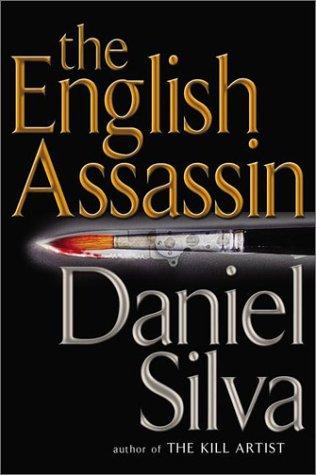
Talk to The English Assassin like its author wrote you back.
Get the ideas that fit your life — not generic summaries.
- Chat with the book
- Audiobook-style main ideas
- Adapts to your life and goals
- Helps you take action
What it argues
Gabriel Allon, Mossad's master art restorer and occasional assassin, travels to Zurich to collect a painting from a banker named Augustus Rolfe — only to find Rolfe already dead and himself framed for the murder. What follows is a race across Europe as Gabriel tries to clear his name while uncovering what Rolfe knew: the extent of Swiss complicity in handling Nazi gold and stolen art during World War II, and the network of powerful people who want that history buried.
The English Assassin is the second Gabriel Allon novel and the book that established the series' signature combination: art history, Cold War institutional memory, and Euro-thriller tradecraft, all centered on a protagonist whose gift for creating beauty coexists with his capacity to destroy it. Silva is a former journalist, and the Swiss banking scandal — the actual 1990s-2000s controversy over Holocaust survivors' accounts and Nazi-era assets — gives the novel a factual backbone that lifts it above standard spy fiction.
What it gets right
- 1.
The Swiss banking scandal of the late 1990s — real negotiations over Holocaust-era accounts, real stonewalling by Swiss institutions — provides the historical scaffolding for the novel's central conspiracy.
- 2.
Gabriel's dual identity as art restorer and intelligence operative is the series' central psychological conceit: the same precision and patience that reconstructs damaged paintings is deployed in service of violence.
- 3.
Silva uses Switzerland's particular history — neutrality as moral cover, discretion as enabler — to examine how respectable institutions facilitated crimes they could later claim not to have committed.
What it covers
Who wrote it
Daniel Silva is an American author and former journalist who worked for CNN and United Press International before turning to fiction. He is best known for the Gabriel Allon series, which as of 2026 runs to more than twenty novels and has appeared on the New York Times bestseller list with virtually every entry. Silva's work is informed by his journalism background and by his interest in European history, intelligence operations, and the intersection of art and geopolitics. He lives in Florida with his wife, journalist Jamie Gangel.
