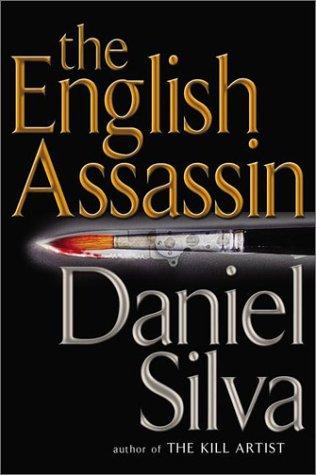
The English Assassin by Daniel Silva is a 2002 thriller book about nazi gold and swiss complicity, art and identity, intelligence operations. The Swiss banking scandal of the late 1990s — real negotiations over Holocaust-era accounts, real stonewalling by Swiss institutions — provides the historical scaffolding for the novel's central conspiracy.
Summary
Gabriel Allon, Mossad's master art restorer and occasional assassin, travels to Zurich to collect a painting from a banker named Augustus Rolfe — only to find Rolfe already dead and himself framed for the murder. What follows is a race across Europe as Gabriel tries to clear his name while uncovering what Rolfe knew: the extent of Swiss complicity in handling Nazi gold and stolen art during World War II, and the network of powerful people who want that history buried.
The English Assassin is the second Gabriel Allon novel and the book that established the series' signature combination: art history, Cold War institutional memory, and Euro-thriller tradecraft, all centered on a protagonist whose gift for creating beauty coexists with his capacity to destroy it. Silva is a former journalist, and the Swiss banking scandal — the actual 1990s-2000s controversy over Holocaust survivors' accounts and Nazi-era assets — gives the novel a factual backbone that lifts it above standard spy fiction.
Silva's strengths are atmospheric efficiency and institutional knowledge. He writes Europe well — the mountain passes, the old money, the long institutional memories — and the Swiss banking scandal material is handled with enough historical specificity to feel grounded. Gabriel himself is more interesting than the average intelligence protagonist: his work as a restorer gives him a contemplative quality that his operational work doesn't quite allow, and Silva makes use of the tension between those two modes.
The novel is well-crafted genre work rather than literary fiction. Characterization beyond Allon is functional; the romantic subplot feels obligatory; the villains are efficiently menacing. But as the second entry in a long series, it earns its place by deepening Allon's biography without over-explaining it, and by taking its historical subject seriously enough that the thriller mechanics don't overwhelm the underlying moral question about what accountability looks like fifty years after the fact.
Talk to The English Assassin like its author wrote you back.
Get the ideas that fit your life — not generic summaries.
- Chat with the book
- Audiobook-style main ideas
- Adapts to your life and goals
- Helps you take action
Key takeaways
- 1.
The Swiss banking scandal of the late 1990s — real negotiations over Holocaust-era accounts, real stonewalling by Swiss institutions — provides the historical scaffolding for the novel's central conspiracy.
- 2.
Gabriel's dual identity as art restorer and intelligence operative is the series' central psychological conceit: the same precision and patience that reconstructs damaged paintings is deployed in service of violence.
- 3.
Silva uses Switzerland's particular history — neutrality as moral cover, discretion as enabler — to examine how respectable institutions facilitated crimes they could later claim not to have committed.
- 4.
The stolen-art thread connects the wartime past to the present in a way that makes the historical stakes feel personal rather than abstract.
- 5.
Gabriel's operating alone, without institutional backing, creates a procedural problem the novel exploits well: how does an intelligence professional function when his own service can't acknowledge him?
- 6.
The novel argues that collective institutional forgetting — choosing not to investigate because investigation is inconvenient — is its own form of complicity.
- 7.
The European setting is not just backdrop but argument: old money, old secrets, and old complicity are specifically European problems that American thriller settings don't carry.
- 8.
Silva's art restoration sequences are genuinely informative and give the series a texture most spy thrillers lack — a sense that the protagonist cares about something beyond the mission.
Discussion questions
Use these on your own, with a book club, or as chat starters in Superbook. Book club version, ready to copy or print →
- 1.
Gabriel's skill as a restorer is repeatedly contrasted with his skill as an operative. Does the novel resolve that tension, or does it leave Gabriel permanently divided?
- 2.
Switzerland's neutrality during World War II has been reevaluated significantly in the decades since. How does The English Assassin use that historical reassessment, and does it oversimplify it?
- 3.
The novel suggests that powerful families and institutions will do violence to preserve secrets from the war era. Is that a plausible argument about human behavior, or thriller melodrama?
- 4.
Gabriel is framed for a murder he didn't commit and has to act without institutional backing. How does operating outside sanctioned authority change the moral calculus of what he does?
- 5.
Silva is an American writing about European institutions and specifically about Swiss banking culture. Did the novel feel credibly European to you, or did it read as an American outsider's version?
- 6.
The stolen-art narrative intersects with the Nazi-gold narrative. Are those two threads better served separately or together — does the combination add complexity or muddy the focus?
- 7.
Compared to The Day of the Jackal or the Odessa File — earlier European political thrillers — what does The English Assassin do differently with similar material?
- 8.
Gabriel's backstory involves a personal tragedy that runs parallel to the professional story. Did that biographical depth add to your investment in the character or feel like conventional thriller machinery?
- 9.
The novel was published in 2002, shortly after 9/11, and the intelligence world it depicts is pre-transformation. How much does that historical moment inflect the book's view of intelligence services?
- 10.
If accountability for wartime complicity expires after a certain number of decades, where does that line fall? The novel seems to argue it doesn't expire — do you agree?
- 11.
This is the second novel in a long series. Did it make you want to read the others, and what would it take for a thriller series to justify going beyond five or six books?
Themes
Frequently asked questions
-
Do I need to read the first Gabriel Allon novel before The English Assassin?
Not strictly. Silva provides enough context that The English Assassin works as a standalone. Reading The Kill Artist first fills in Gabriel's backstory and gives the personal stakes in this novel more weight, but many readers start here without issue.
-
Is The English Assassin based on real events?
Partly. The Swiss banking scandal — the controversy over Holocaust-era accounts, Nazi gold, and Swiss institutional obstruction — is real and well-documented. The specific conspiracy and characters are fictional. Silva uses the real scandal as historical scaffolding for a fictional thriller.
-
Is the Gabriel Allon series worth reading in order?
The early books (The Kill Artist through The Messenger or so) are the best and most self-contained. As the series extends past ten books, readers tend to diverge on whether Silva maintains quality. The first five are consistently well-regarded.
-
Who shouldn't read The English Assassin?
Readers who want psychological complexity over thriller mechanics, those who find European spy fiction's pace too slow, and anyone who bounces off series novels that assume ongoing investment in a character. The novel is craft-solid but not essential if spy thrillers aren't your genre.
-
What distinguishes Daniel Silva from other thriller writers working in similar territory?
The art restoration element is unusual and gives Gabriel a contemplative dimension rare in spy protagonists. Silva's historical research is solid, and his European settings feel lived-in rather than researched-from-a-desk. The writing is cleaner than most of his competition.
Similar books
The Day of the Jackal
Frederick Forsyth
The Odessa File
Frederick Forsyth
The Spy and the Traitor: The Greatest Espionage Story of the Cold War
Ben Macintyre
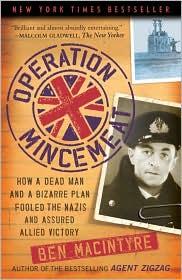
Operation Mincemeat: How a Dead Man and a Bizarre Plan Fooled the Nazis and Assured an Allied Victory
Ben Macintyre
