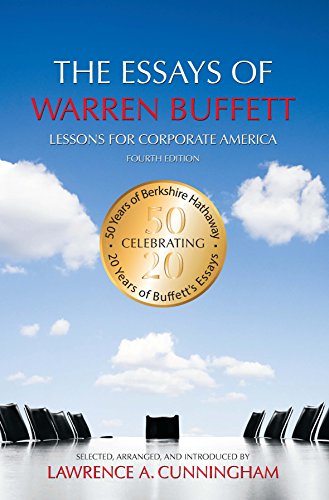
Talk to The Essays of Warren Buffett like its author wrote you back.
Get the ideas that fit your life — not generic summaries.
- Chat with the book
- Audiobook-style main ideas
- Adapts to your life and goals
- Helps you take action
What it argues
The Essays of Warren Buffett is Lawrence Cunningham's thematic compilation of Warren Buffett's annual letters to Berkshire Hathaway shareholders, spanning from the 1970s through the year of publication. The letters themselves are widely considered the best annual reports written by any CEO in history — clear, honest, occasionally funny, and full of direct explanation of how Buffett thinks about business, accounting, corporate governance, and investing. Cunningham reorganized the material from chronological to thematic, which makes the book a more useful reference than reading the raw letters.
The compilation covers Buffett's investment philosophy in its fullest articulation: the difference between price and value, the importance of understanding businesses before owning their shares, the role of competitive advantage (what Buffett calls the economic "moat"), his preference for buying wonderful companies at fair prices over mediocre companies at cheap prices, and the irreplaceable importance of management integrity. These themes recur across decades of letters as Buffett returns to the same ideas with different examples.
What it gets right
- 1.
Owner earnings — not reported net income — reflect the true cash generation of a business. Accounting earnings systematically overstate or understate economic reality in ways that matter for valuation.
- 2.
A business with a durable competitive moat — pricing power, switching costs, network effects — is worth paying a fair price for, not just a cheap price.
- 3.
Most stock repurchases are economically destructive when done at prices above intrinsic value. They enrich selling shareholders at the expense of continuing shareholders.
What it covers
Who wrote it
Warren Buffett is the chairman and CEO of Berkshire Hathaway and one of the most successful investors in history. He studied under Benjamin Graham at Columbia Business School and worked at Graham-Newman before launching his own investment partnerships in 1956. He acquired control of Berkshire Hathaway, a failing textile company, in 1965 and transformed it into a holding company with more than sixty subsidiaries. Lawrence Cunningham is a law professor at George Washington University who edited and organized the annual letters into thematic form. The essays were first compiled and distributed in 1996 and have been updated in multiple editions as new letters have been written.
