Talk to The Famished Road like its author wrote you back.
Get the ideas that fit your life — not generic summaries.
- Chat with the book
- Audiobook-style main ideas
- Adapts to your life and goals
- Helps you take action
The Famished Road, in detail
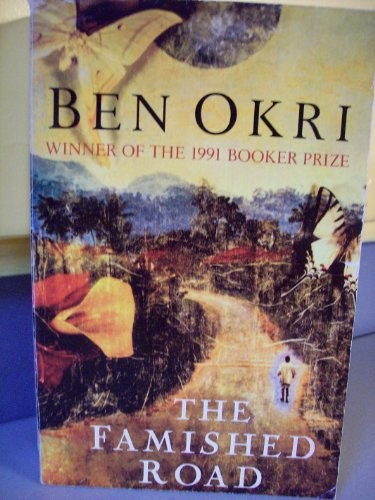
The Famished Road is narrated by Azaro, a spirit child in West Africa. In Yoruba cosmology, some children are abiku — born between the spirit world and the living one, inclined to die young and return. Azaro has chosen, unusually, to stay in the living world. The novel follows his childhood in a poor compound in a Nigerian city — his father's boxing ambitions and political awakening, his mother's exhausting labor, the spirits and visions that flood Azaro's perception of ordinary streets, the violence that circles the community as the country approaches independence.
The novel is structured as sustained immersion rather than conventional plot. Ben Okri is not primarily interested in causation — things happen, repeat, transform — but in the texture of experience at the boundary between the material and spirit worlds. The road of the title is the eternal road that stretches between birth and death, between the world of the living and the world beyond; it is famished because it feeds on people who travel it. This is not allegory in a straightforward sense. Okri uses the abiku framework to explore what it means to live in a world where the spiritual, the political, and the physical are not separate registers but continuous.
The prose is lush and incantatory — this is one of the most demanding works of sustained magical realism in English, and readers who want narrative economy will find it relentless. Those who submit to it often describe the reading experience as trance-like. The political dimension is not abstract: the colonial history, the poverty, the tribal politics, the violence of elections and their aftermath, all arrive with documentary specificity. Okri refuses to make misery picturesque. The spirits are beautiful; the human conditions they move among are brutal.
The Famished Road won the Booker Prize in 1991. It has a different relationship to magical realism than Garcia Marquez — it comes from inside the tradition it depicts rather than from a Latin American writer exoticizing European audiences' expectation of the exotic. The comparison is to Beloved for the integration of spirit logic into the texture of historical suffering, and to Achebe's Things Fall Apart for Nigerian literary context — though Okri's mode is far more visionary than Achebe's realism.
The big ideas
- 1.
Azaro's choice to remain in the living world despite the spirits' temptation to return is the novel's central gesture: a commitment to imperfect life over the peace of the spirit world.
- 2.
The road is the novel's central symbol — the eternal passage between worlds on which human lives are spent and consumed. Its hunger is not malevolent; it simply is.
- 3.
Okri embeds political violence — election rigging, gangsterism, colonial power structures — within a spirit narrative, which is a formal argument that political suffering has a spiritual dimension that cannot be separated from it.
