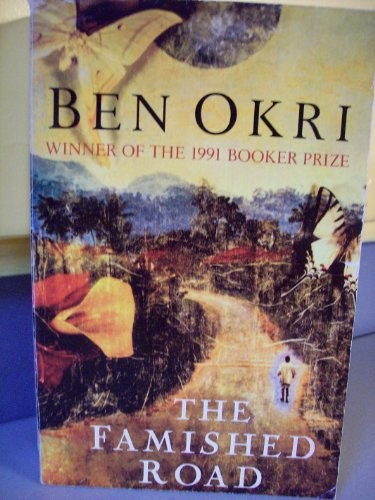
The Famished Road by Ben Okri is a 1991 literary fiction book about spirit and the living world, poverty and endurance, myth and modernity. Azaro's choice to remain in the living world despite the spirits' temptation to return is the novel's central gesture: a commitment to imperfect life over the peace of the spirit world.
Summary
The Famished Road is narrated by Azaro, a spirit child in West Africa. In Yoruba cosmology, some children are abiku — born between the spirit world and the living one, inclined to die young and return. Azaro has chosen, unusually, to stay in the living world. The novel follows his childhood in a poor compound in a Nigerian city — his father's boxing ambitions and political awakening, his mother's exhausting labor, the spirits and visions that flood Azaro's perception of ordinary streets, the violence that circles the community as the country approaches independence.
The novel is structured as sustained immersion rather than conventional plot. Ben Okri is not primarily interested in causation — things happen, repeat, transform — but in the texture of experience at the boundary between the material and spirit worlds. The road of the title is the eternal road that stretches between birth and death, between the world of the living and the world beyond; it is famished because it feeds on people who travel it. This is not allegory in a straightforward sense. Okri uses the abiku framework to explore what it means to live in a world where the spiritual, the political, and the physical are not separate registers but continuous.
The prose is lush and incantatory — this is one of the most demanding works of sustained magical realism in English, and readers who want narrative economy will find it relentless. Those who submit to it often describe the reading experience as trance-like. The political dimension is not abstract: the colonial history, the poverty, the tribal politics, the violence of elections and their aftermath, all arrive with documentary specificity. Okri refuses to make misery picturesque. The spirits are beautiful; the human conditions they move among are brutal.
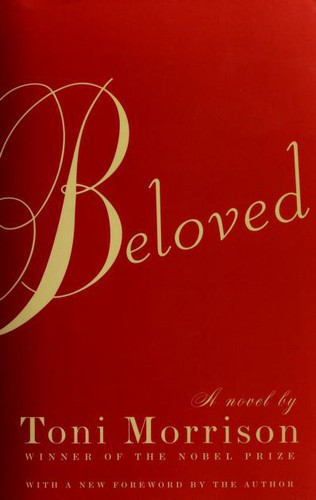
The Famished Road won the Booker Prize in 1991. It has a different relationship to magical realism than Garcia Marquez — it comes from inside the tradition it depicts rather than from a Latin American writer exoticizing European audiences' expectation of the exotic. The comparison is to Beloved for the integration of spirit logic into the texture of historical suffering, and to Achebe's Things Fall Apart for Nigerian literary context — though Okri's mode is far more visionary than Achebe's realism.
Talk to The Famished Road like its author wrote you back.
Get the ideas that fit your life — not generic summaries.
- Chat with the book
- Audiobook-style main ideas
- Adapts to your life and goals
- Helps you take action
Key takeaways
- 1.
Azaro's choice to remain in the living world despite the spirits' temptation to return is the novel's central gesture: a commitment to imperfect life over the peace of the spirit world.
- 2.
The road is the novel's central symbol — the eternal passage between worlds on which human lives are spent and consumed. Its hunger is not malevolent; it simply is.
- 3.
Okri embeds political violence — election rigging, gangsterism, colonial power structures — within a spirit narrative, which is a formal argument that political suffering has a spiritual dimension that cannot be separated from it.
- 4.
The father's boxing is one of the novel's most memorable sustained sequences. It is both literal and mythic — a man fighting against a force that cannot be defeated, and insisting on fighting anyway.
- 5.
Poverty in the novel is not ennobling and is not merely context. Okri describes its specific textures — hunger, debt, exhaustion, the particular way it deforms relationships — with unflinching attention.
- 6.
The Yoruba cosmological framework is not explained for the reader's convenience. You learn it by immersion, which is itself a methodological statement: these systems are not exotic decoration but a complete way of understanding existence.
- 7.
The abiku tradition — spirit children who return repeatedly — is used to raise the question of what binds a person to life. Azaro's attachment to his parents and his world is the novel's emotional core.
- 8.
The ending is deliberately unresolved. The road continues. Azaro remains between worlds. Okri refuses the consolation of conclusion because the reality the novel depicts does not offer it.
Discussion questions
Use these on your own, with a book club, or as chat starters in Superbook. Book club version, ready to copy or print →
- 1.
The novel requires you to accept Azaro's spirit world as real — not as metaphor or hallucination, but as a dimension of reality the other characters mostly cannot perceive. How did you navigate that as a reader?
- 2.
The father's political awakening, his boxing, his drinking, his love for Azaro — do these cohere into a single character, or does Okri distribute too much onto him?
- 3.
The spirits in the novel sometimes appear as beautiful and sometimes as grotesque. What determines which? Is there a logic to the spirit world's affect?
- 4.
The novel is set in the run-up to Nigerian independence, but that context is embedded rather than foregrounded. Does it help to know that history, or does the novel work without it?
- 5.
Compared to Garcia Marquez's One Hundred Years of Solitude — another novel frequently placed in the magical realism tradition — how does The Famished Road differ in its relationship to its cultural context?
- 6.
Okri has been criticized for writing a version of African life that plays to Western audiences' expectations of the mystical and the suffering. Do you find that a fair critique?
- 7.
The prose is long, incantatory, and deliberately repetitive. Did you find that mode transporting or exhausting?
- 8.
The mother is one of the more quietly remarkable characters in the novel — enduring, constant, slightly unknowable. What does her steadiness mean in a narrative so full of volatility?
- 9.
The abiku mythology implies that some children are half-committed to life. Is that a comforting framework for understanding childhood death, or a disturbing one?
- 10.
By the novel's end, Azaro remains between worlds. Is that an earned ambiguity or a refusal to conclude? What would a resolution have looked like?
- 11.
The road that gives the novel its title consumes people who travel it. What does it mean that the novel ends with the road still hungry?
- 12.
Beloved also uses a spirit framework to inhabit historical trauma. Where do the two novels share methodology, and where do they diverge?
Themes
Frequently asked questions
-
Is The Famished Road worth reading?
For readers who are patient with difficult, immersive prose and who are interested in spirit traditions treated seriously rather than as decoration, it is extraordinary. It is one of the most distinctive works of the Booker prize list. For readers who need pace and conventional narrative, it is a significant undertaking.
-
Is The Famished Road hard to read?
Very. The prose is deliberately incantatory and repetitive, the structure episodic rather than causal, and the spirit world is presented without explanation. Many readers find it demanding to sustain over its length. Reading it in long sessions rather than fragments tends to help.
-
What is The Famished Road about, without spoilers?
A spirit child in West Africa who has chosen to remain in the living world, growing up in poverty in a Nigerian city in the years around independence. The novel moves between his daily life and the spirit world he can still see, with his father's political struggles running as a parallel narrative.
-
What is a spirit child or abiku?
In Yoruba cosmology, abiku are children caught between the spirit world and the living one who tend to die young and be reborn repeatedly. The community recognizes them by certain signs. Okri uses this tradition as the novel's structural premise — Azaro is an abiku who has decided, unusually, to stay.
-
Who shouldn't read The Famished Road?
Readers who want narrative clarity, forward momentum, and resolution. The novel is structured by immersion and repetition rather than causation and climax. If magical realism in general leaves you cold, this most demanding version of it will not convert you.