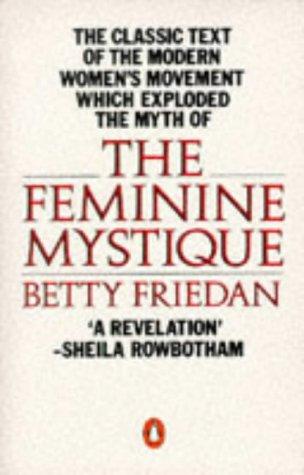
Talk to The Feminine Mystique like its author wrote you back.
Get the ideas that fit your life — not generic summaries.
- Chat with the book
- Audiobook-style main ideas
- Adapts to your life and goals
- Helps you take action
What it argues
The Feminine Mystique is Betty Friedan's 1963 diagnosis of a cultural crisis she called "the problem that has no name" — the pervasive unhappiness of educated American women who had, by all social measures, everything they were supposed to want: a house in the suburbs, a devoted husband, healthy children, and freedom from paid work. The book argues that this unhappiness is not neurosis but the rational response to a life that has been stripped of meaning, autonomy, and challenge.
Friedan's central target is what she calls the "feminine mystique" — the mid-century American ideology that equated femininity with domesticity, defined women's fulfillment entirely in terms of their relationships to husbands and children, and treated any desire for independent work or intellectual life as a form of pathology or unfemininity. She traces this mystique through women's magazines, advertising, Freudian psychology as it was adapted for popular use, and the sociology of the postwar suburbs. The picture she draws is of a culture that had educated women and then confined them.
What it gets right
- 1.
The feminine mystique is Friedan's name for the mid-century American ideology that defined women's worth entirely through their roles as wives and mothers, treating any other aspiration as deviant.
- 2.
The 'problem that has no name' — the pervasive unhappiness of educated housewives — is not neurosis but a rational response to a life systematically emptied of intellectual challenge and autonomy.
- 3.
Women's magazines, advertising, and pop-psychology worked together to push women out of public life and back into domesticity in the postwar years, often under the banner of fulfillment.
What it covers
Who wrote it
Betty Friedan (1921–2006) was an American writer, feminist activist, and co-founder of the National Organization for Women. She studied psychology at Smith College and Berkeley before working as a journalist. The Feminine Mystique, published in 1963 when she was 42, was based partly on a survey she conducted of her Smith College classmates fifteen years after graduation. She later wrote It Changed My Life, The Second Stage, and The Fountain of Age, and remained an active voice in the women's movement until her death. She was controversial within feminism for some of her later positions on family and sexuality.
