Talk to The Feminine Mystique like its author wrote you back.
Get the ideas that fit your life — not generic summaries.
- Chat with the book
- Audiobook-style main ideas
- Adapts to your life and goals
- Helps you take action
The Feminine Mystique, in detail
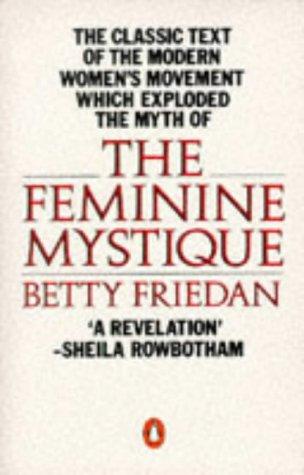
The Feminine Mystique is Betty Friedan's 1963 diagnosis of a cultural crisis she called "the problem that has no name" — the pervasive unhappiness of educated American women who had, by all social measures, everything they were supposed to want: a house in the suburbs, a devoted husband, healthy children, and freedom from paid work. The book argues that this unhappiness is not neurosis but the rational response to a life that has been stripped of meaning, autonomy, and challenge.
Friedan's central target is what she calls the "feminine mystique" — the mid-century American ideology that equated femininity with domesticity, defined women's fulfillment entirely in terms of their relationships to husbands and children, and treated any desire for independent work or intellectual life as a form of pathology or unfemininity. She traces this mystique through women's magazines, advertising, Freudian psychology as it was adapted for popular use, and the sociology of the postwar suburbs. The picture she draws is of a culture that had educated women and then confined them.
The second half of the book is more prescriptive. Friedan argues that women need work — not volunteer work or creative hobbies, but serious, demanding, paid professional work. Only through such work, she argues, can women develop the identity and sense of purpose that the feminine mystique denied them. The prescription is directed at a specific population: educated, middle-class women with the material conditions to choose. This limitation has been extensively criticized by later feminist thinkers.
The book sold over a million copies in its first year, sparked enormous cultural conversation, and contributed directly to the founding of NOW (the National Organization for Women) in 1966. Its historical importance is unquestionable. Its limitations are equally real: it largely ignores women of color, working-class women for whom paid work was never optional, and the ways in which the professional world it held up as liberatory was itself structured by race, class, and patriarchy. Read as a document of its moment and its audience, it is a remarkably clear-eyed diagnosis of one particular form of female unhappiness.
The big ideas
- 1.
The feminine mystique is Friedan's name for the mid-century American ideology that defined women's worth entirely through their roles as wives and mothers, treating any other aspiration as deviant.
- 2.
The 'problem that has no name' — the pervasive unhappiness of educated housewives — is not neurosis but a rational response to a life systematically emptied of intellectual challenge and autonomy.
- 3.
Women's magazines, advertising, and pop-psychology worked together to push women out of public life and back into domesticity in the postwar years, often under the banner of fulfillment.
