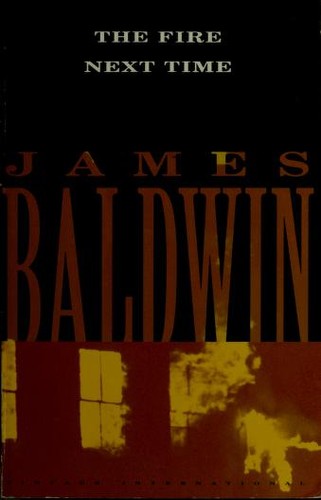
Talk to The Fire Next Time like its author wrote you back.
Get the ideas that fit your life — not generic summaries.
- Chat with the book
- Audiobook-style main ideas
- Adapts to your life and goals
- Helps you take action
What it argues
The Fire Next Time, published in 1963 at the height of the civil rights movement, contains two long essays by James Baldwin. The first, "My Dungeon Shook," is a letter to his nephew on the one hundredth anniversary of the Emancipation Proclamation. The second and longer essay, "Down at the Cross," recounts Baldwin's teenage years in the church, his encounter with the Nation of Islam, and his wider analysis of American racial history. Together they constitute one of the most powerful pieces of American political writing in the twentieth century.
Baldwin's argument in "Down at the Cross" moves on two levels. On the personal level, he describes how the church — and specifically the persona of the young preacher he became — gave him status and community in Harlem but also required him to perform a faith he did not fully feel. The Nation of Islam, which he encountered through Elijah Muhammad, offered a different framework: a diagnosis of white supremacy that was rigorous and unsparing, and a black pride that the mainstream civil rights movement sometimes avoided. Baldwin found it intellectually honest but ultimately too closed, too willing to replace one prison with another.
What it gets right
- 1.
American racial injustice is not an aberration or a legacy problem — it is structural, ongoing, and inseparable from American identity as it has been constructed.
- 2.
Baldwin's letter to his nephew argues that the conditions of Black life in America are not the result of Black failure but of deliberate white policy, and that survival requires knowing this clearly.
- 3.
The church gave Baldwin community and authority in his youth, but also demanded a performance of certainty he could not sustain — a tension he sees as characteristic of institutions that promise transcendence while enforcing hierarchy.
What it covers
Who wrote it
James Baldwin (1924–1987) was an American novelist, playwright, and essayist whose work explored race, sexuality, and class in mid-twentieth-century America. Born and raised in Harlem, he moved to Paris in 1948 and lived much of his adult life between France and the United States. His novels include Go Tell It on the Mountain, Giovanni's Room, and Another Country. His essay collections — Notes of a Native Son, Nobody Knows My Name, and The Fire Next Time — established him as one of the most important political writers of the civil rights era.
