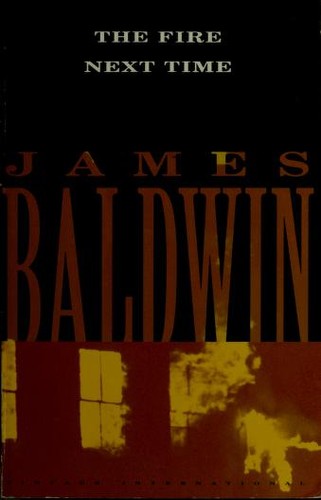
The Fire Next Time by James Baldwin is a 1963 history book about race in america, identity, religion. American racial injustice is not an aberration or a legacy problem — it is structural, ongoing, and inseparable from American identity as it has been constructed.
Summary
The Fire Next Time, published in 1963 at the height of the civil rights movement, contains two long essays by James Baldwin. The first, "My Dungeon Shook," is a letter to his nephew on the one hundredth anniversary of the Emancipation Proclamation. The second and longer essay, "Down at the Cross," recounts Baldwin's teenage years in the church, his encounter with the Nation of Islam, and his wider analysis of American racial history. Together they constitute one of the most powerful pieces of American political writing in the twentieth century.
Baldwin's argument in "Down at the Cross" moves on two levels. On the personal level, he describes how the church — and specifically the persona of the young preacher he became — gave him status and community in Harlem but also required him to perform a faith he did not fully feel. The Nation of Islam, which he encountered through Elijah Muhammad, offered a different framework: a diagnosis of white supremacy that was rigorous and unsparing, and a black pride that the mainstream civil rights movement sometimes avoided. Baldwin found it intellectually honest but ultimately too closed, too willing to replace one prison with another.
On the political level, Baldwin argues that America has never honestly confronted what it built on the labor and suffering of enslaved people, and that this refusal is destroying not just Black Americans but white ones too. The famous formulation — that white Americans need Black Americans to tell them who they are — is not flattery. It is an indictment. Baldwin insists that no political progress is possible until white Americans reckon with what their identity costs other people and what it costs themselves.
The book remains urgent because its central analysis is unfinished. Baldwin was writing about 1963, but the mechanisms he describes — the way institutions produce suffering and then blame the sufferer, the way identity becomes a substitute for consciousness — have not been dismantled. What keeps the book alive, beyond its historical importance, is Baldwin's prose: supple, precise, unwilling to simplify. He demands more of the reader than comfort.
Talk to The Fire Next Time like its author wrote you back.
Get the ideas that fit your life — not generic summaries.
- Chat with the book
- Audiobook-style main ideas
- Adapts to your life and goals
- Helps you take action
Key takeaways
- 1.
American racial injustice is not an aberration or a legacy problem — it is structural, ongoing, and inseparable from American identity as it has been constructed.
- 2.
Baldwin's letter to his nephew argues that the conditions of Black life in America are not the result of Black failure but of deliberate white policy, and that survival requires knowing this clearly.
- 3.
The church gave Baldwin community and authority in his youth, but also demanded a performance of certainty he could not sustain — a tension he sees as characteristic of institutions that promise transcendence while enforcing hierarchy.
- 4.
The Nation of Islam offered an honest account of white supremacy but, in Baldwin's reading, proposed to answer one absolutism with another rather than with genuine freedom.
- 5.
White Americans have constructed their identity in opposition to Black Americans, which means their identity depends on the continued dehumanization of others — a trap Baldwin insists they can only escape by confronting it.
- 6.
Love, for Baldwin, is not sentiment — it is the willingness to see the full humanity of another person, including the parts that are inconvenient or threatening to your own self-image.
- 7.
The title's reference to an old spiritual — 'God gave Noah the rainbow sign, no more water, the fire next time' — frames the book as a final warning: reckon now or face consequences that will not be gentle.
- 8.
Baldwin does not offer a program or a policy solution. He offers consciousness as a precondition for any solution: you cannot build what you will not see.
Discussion questions
Use these on your own, with a book club, or as chat starters in Superbook. Book club version, ready to copy or print →
- 1.
Baldwin addresses his letter to his nephew rather than to a general public. What does that framing allow him to say that a political speech could not?
- 2.
He describes the church as both salvation and trap. What institutions in your own experience have played that double role?
- 3.
Baldwin argues that white Americans need Black Americans to define themselves. What does he mean by that, and do you find it convincing?
- 4.
His encounter with Elijah Muhammad is respectful but finally critical. What specifically does Baldwin find valuable in the Nation of Islam's analysis, and where does he break from it?
- 5.
Baldwin insists that love — not law — is the only real answer to racial injustice. Is that a cop-out or a genuinely radical claim? What does he mean by love?
- 6.
The book was published in 1963. Which of its claims feel resolved, and which feel more accurate now than they did then?
- 7.
Baldwin distinguishes between innocence — which he sees as willed ignorance — and consciousness. What would it take to move from one to the other?
- 8.
The book is very short. Does its length affect how seriously you take it as political argument? What would be lost if it were longer?
- 9.
Baldwin writes about religion with both intimacy and skepticism. How does his complicated relationship with Christianity shape his analysis of race?
- 10.
He argues that the dehumanization of Black Americans dehumanizes white Americans too. Is that argument rhetorical strategy or genuine belief, and does it matter which?
- 11.
What is Baldwin asking white readers to do? Is it a reasonable ask?
- 12.
The fire metaphor suggests urgency and destruction. Sixty years later, was the warning taken seriously?
Themes
Frequently asked questions
-
What is The Fire Next Time about?
It is two essays. The first is a letter to Baldwin's nephew about survival under American racism. The second is a longer personal and political essay about Baldwin's church upbringing, his encounter with the Nation of Islam, and his analysis of how race and identity are structured in America.
-
How long is The Fire Next Time?
Around two hours at average reading pace. The book is about 100 pages. Its brevity is not a sign of thinness — Baldwin's prose is dense and rewards slow reading.
-
Is The Fire Next Time still relevant?
Yes. The structural analysis Baldwin offers in 1963 anticipates debates about systemic racism, white identity politics, and the limits of legal reform that remain unresolved. The writing is also simply remarkable regardless of its historical context.
-
Who should read The Fire Next Time?
Anyone interested in American racial history, in the essay as a form, or in how literature can do political work without becoming propaganda. It is especially useful paired with Ta-Nehisi Coates's Between the World and Me, which is explicitly modeled on it.
-
What does Baldwin mean by the fire next time?
He is quoting an old spiritual that draws on the biblical story of Noah: God destroyed the world with water once, and will use fire next. Baldwin uses it as a warning that America's racial reckoning, if indefinitely deferred, will eventually arrive in a form no one controls.
Similar books
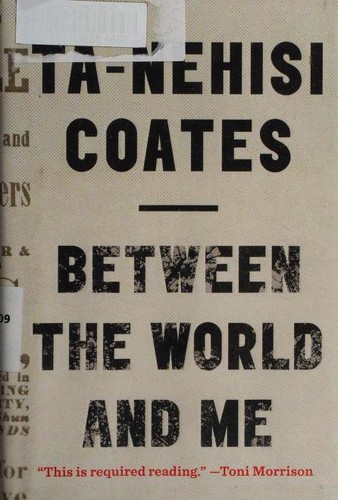
Between the World and Me
Ta-Nehisi Coates
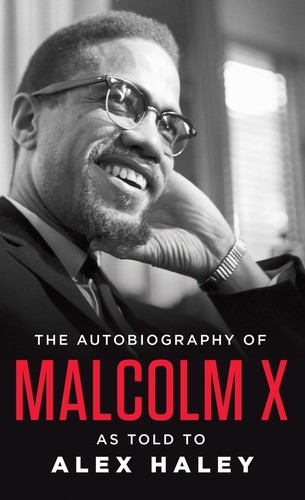
The Autobiography of Malcolm X
Malcolm X and Alex Haley
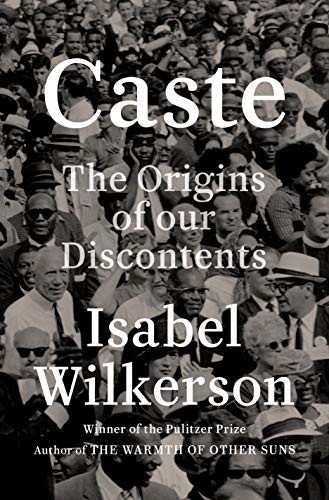
Caste: The Origins of Our Discontents
Isabel Wilkerson
The New Jim Crow: Mass Incarceration in the Age of Colorblindness
Michelle Alexander
