Talk to The First 20 Minutes like its author wrote you back.
Get the ideas that fit your life — not generic summaries.
- Chat with the book
- Audiobook-style main ideas
- Adapts to your life and goals
- Helps you take action
What it argues
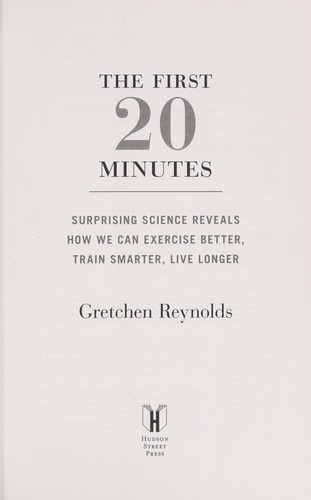
The First 20 Minutes is Gretchen Reynolds's survey of exercise science research, organized around the finding that the greatest health benefits of physical activity come from the first twenty minutes of movement — and that beyond a certain threshold of exercise, health gains plateau or even reverse. Reynolds is the "Phys Ed" columnist for the New York Times and has spent years covering exercise research, and the book reflects a practiced journalist's ability to identify the findings that contradict conventional wisdom and explain what they mean for how people should spend their exercise time.
The book's title refers to a specific finding: for sedentary individuals, moving from inactivity to twenty minutes of moderate activity per day produces most of the measurable health benefit that any amount of additional exercise produces. The implication is that maximalism is not required for health — the minimum viable dose of exercise is lower than fitness culture implies, and the marginal return on additional hours in the gym is small for most health outcomes. This is liberating rather than deflationary: the evidence says you don't need to run marathons to be healthy.
What it gets right
- 1.
The greatest health benefits of exercise come from moving from sedentary to minimally active — roughly twenty minutes of moderate activity per day — with diminishing returns on additional exercise time for general health outcomes.
- 2.
Static stretching before exercise reduces force production and increases injury risk during the subsequent activity; dynamic warm-up movements are more appropriate pre-exercise preparation.
- 3.
High-intensity interval training produces cardiovascular adaptations equivalent to longer moderate-intensity training in a fraction of the time, making it the most efficient training method for aerobic fitness.
What it covers
Who wrote it
Gretchen Reynolds is an American journalist and the author of the "Phys Ed" column for the New York Times, which covers exercise science research for a general audience. She also contributes to the New York Times Magazine and other publications. Reynolds holds a journalism degree from the University of Illinois and has been covering health, medicine, and fitness for over two decades. The First 20 Minutes, published in 2012, draws on her years of reporting on exercise science and is designed to translate research findings into practical guidance for people with limited time and energy for exercise. She lives in New Mexico.
