Talk to The Five Dysfunctions of a Team like its author wrote you back.
Get the ideas that fit your life — not generic summaries.
- Chat with the book
- Audiobook-style main ideas
- Adapts to your life and goals
- Helps you take action
The Five Dysfunctions of a Team, in detail
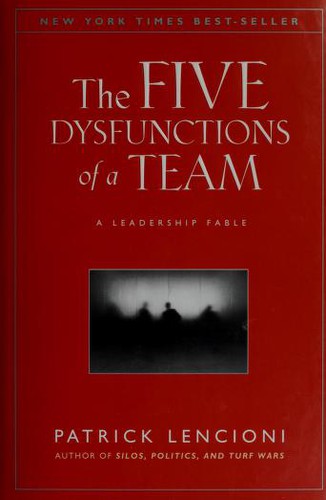
The Five Dysfunctions of a Team is Patrick Lencioni's argument that most teams fail not because of strategy, talent, or resources, but because of five specific, predictable behavioral problems that compound on each other. Lencioni delivers the argument through a business fable — a newly hired CEO named Kathryn takes over a struggling Silicon Valley technology company and spends the book diagnosing and working through team dysfunction with her leadership group. The fable format is deliberately simple, and the model that follows it is the real payload.
The five dysfunctions form a pyramid. At the base is absence of trust, which Lencioni defines not as reliability but as the willingness to be vulnerable with teammates — to admit mistakes, acknowledge weaknesses, and ask for help without fear. Without that foundation, teams avoid genuine conflict, which is the second dysfunction. Fear of conflict leads to artificial harmony: meetings where real disagreements never surface and decisions never get truly bought into, producing the third dysfunction, lack of commitment. Teams that won't commit can't hold each other accountable, the fourth dysfunction, and teams that avoid accountability ultimately lose sight of collective results in favor of individual status and departmental interest — the fifth dysfunction.
The model is coherent and the sequencing matters. Lencioni insists that you cannot shortcut to accountability if trust is broken, because the earlier dysfunctions make the later ones structurally inevitable. The fable illustrates each dysfunction with specific behaviors — a team member who dominates with technical expertise rather than engaging, executives who protect their own divisions in the quarterly review, offsite retreats that produce energy but no follow-through — that most readers will recognize immediately.
The book has real limits. The fable is thin as fiction, and the model is simple enough that some readers will find it underdeveloped compared to the academic literature on group dynamics and psychological safety. It works best as a diagnostic framework and a shared vocabulary for teams that already sense something is wrong. Lencioni's practical exercises — personal histories, team effectiveness exercises, real-time permission to name dysfunction — are more immediately useful than the underlying theory. For a management team trying to identify why their meetings feel hollow, the model is a productive starting point.
The big ideas
- 1.
The five dysfunctions — absence of trust, fear of conflict, lack of commitment, avoidance of accountability, inattention to results — form a cascade. Fixing the top without fixing the base doesn't work.
- 2.
Trust in Lencioni's model means vulnerability-based trust: the willingness to say 'I was wrong,' 'I need help,' or 'your idea is better than mine.' Reliability alone isn't enough.
- 3.
Healthy conflict is ideological and productive, not personal. Teams that avoid it produce artificial harmony where real decisions get made in the hallway rather than in the room.
