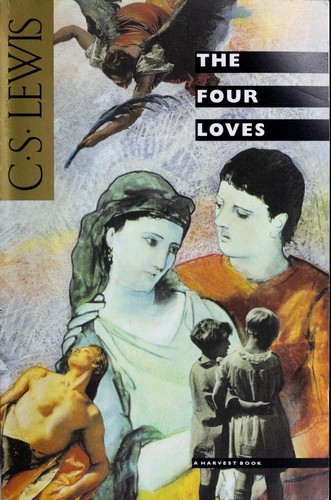
Talk to The Four Loves like its author wrote you back.
Get the ideas that fit your life — not generic summaries.
- Chat with the book
- Audiobook-style main ideas
- Adapts to your life and goals
- Helps you take action
What it argues
The Four Loves is C. S. Lewis's examination of the nature of love, organized around four Greek categories: storge (affection), philia (friendship), eros (romantic love), and agape (charity or divine love). Published in 1960 and adapted from a series of radio talks, the book moves through each type in order, building toward a theological argument that the highest loves can only remain stable when they are grounded in and oriented toward the divine.
Lewis writes about affection as the most instinctive and widespread love — the comfort of familiarity, the fondness that grows between people simply through proximity and habit. He is careful to note that affection is not automatically good. It can become possessive, suffocating, and self-defeating if the person who feels it confuses fondness with ownership. Friendship, by contrast, is the rarest and most misunderstood love. Lewis argues that it arises when two people discover they share a vision of something beyond themselves — a passion, a question, a vocation — and that this shared orientation is what distinguishes genuine friendship from mere companionship.
What it gets right
- 1.
Lewis distinguishes four types of love — affection, friendship, eros, and charity — each with its own logic, its own dangers, and its own relationship to the divine.
- 2.
Affection is the broadest and most habitual love. Its greatest danger is possessiveness: treating the familiarity of another person as a right rather than a gift.
- 3.
Friendship arises from shared vision, not shared time. The question that launches a friendship is: 'You too? I thought I was the only one.'
What it covers
Who wrote it
C. S. Lewis (1898–1963) was a British author and scholar who taught at Oxford and Cambridge. He wrote prolifically across genres: literary criticism, fiction (The Chronicles of Narnia, The Space Trilogy), apologetics (Mere Christianity, The Screwtape Letters), and personal reflection (A Grief Observed). The Four Loves originated as a series of radio addresses for American audiences. Lewis remains one of the most widely read Christian writers of the twentieth century, known for his ability to translate theological ideas into plain, concrete English.
