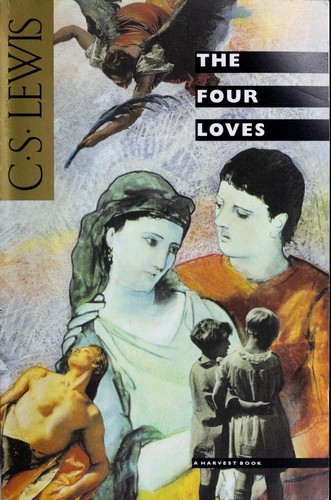
Talk to The Four Loves like its author wrote you back.
Get the ideas that fit your life — not generic summaries.
- Chat with the book
- Audiobook-style main ideas
- Adapts to your life and goals
- Helps you take action
The Four Loves, in detail
The Four Loves is C. S. Lewis's examination of the nature of love, organized around four Greek categories: storge (affection), philia (friendship), eros (romantic love), and agape (charity or divine love). Published in 1960 and adapted from a series of radio talks, the book moves through each type in order, building toward a theological argument that the highest loves can only remain stable when they are grounded in and oriented toward the divine.
Lewis writes about affection as the most instinctive and widespread love — the comfort of familiarity, the fondness that grows between people simply through proximity and habit. He is careful to note that affection is not automatically good. It can become possessive, suffocating, and self-defeating if the person who feels it confuses fondness with ownership. Friendship, by contrast, is the rarest and most misunderstood love. Lewis argues that it arises when two people discover they share a vision of something beyond themselves — a passion, a question, a vocation — and that this shared orientation is what distinguishes genuine friendship from mere companionship.
Eros is treated with unusual seriousness for its era. Lewis insists that erotic love is not identical to mere sexual desire, and that the experience of being "in love" carries with it a sense of self-transcendence — the beloved seems not just desirable but necessary to the cosmos. He is also honest about eros's instability. The feeling that makes love seem transcendent is the same feeling that, unmoored from commitment, can justify almost any behavior. Agape, the final love, is not a feeling at all but a will and an act — the deliberate gift of care that one can extend to enemies, strangers, and the unlovable. Lewis treats it as the love that must undergird all the others to keep them from distortion.
The book is short and literary rather than systematic. Lewis is better at describing the textures of love than at constructing arguments, and the writing is full of observational precision about how people actually behave. Readers who want a philosophical treatise will find it impressionistic. Readers who want to think clearly about what they owe the people in their lives will find it rewarding.
The big ideas
- 1.
Lewis distinguishes four types of love — affection, friendship, eros, and charity — each with its own logic, its own dangers, and its own relationship to the divine.
- 2.
Affection is the broadest and most habitual love. Its greatest danger is possessiveness: treating the familiarity of another person as a right rather than a gift.
- 3.
Friendship arises from shared vision, not shared time. The question that launches a friendship is: 'You too? I thought I was the only one.'
