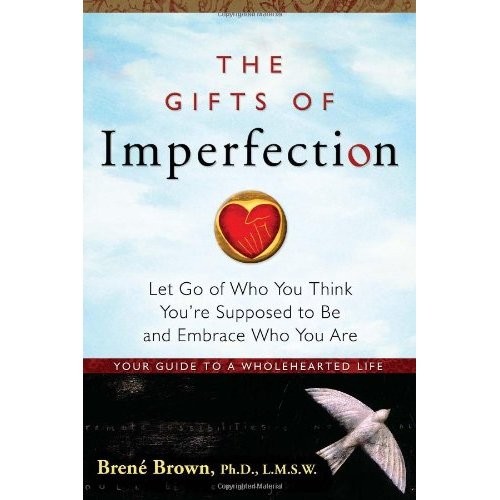
Talk to The Gifts of Imperfection like its author wrote you back.
Get the ideas that fit your life — not generic summaries.
- Chat with the book
- Audiobook-style main ideas
- Adapts to your life and goals
- Helps you take action
The Gifts of Imperfection, in detail
The Gifts of Imperfection is Brené Brown's attempt to translate a decade of qualitative research on shame, vulnerability, and belonging into practical guidance for everyday life. The central concept is "Wholehearted living" — a way of engaging with the world from a place of worthiness rather than from constant striving to earn it. Brown argues that people who live wholeheartedly share a common trait: they believe they are enough as they are, not as they might become.
The book is structured around ten guideposts, each pairing something to let go of with something to cultivate. Let go of perfectionism, cultivate self-compassion. Let go of numbing and powerlessness, cultivate stillness and calm. Let go of exhaustion as a status symbol, cultivate play and rest. This format is deliberately simple — Brown is writing for a general audience, not an academic one — and the tone is personal and confessional. She draws heavily on her own struggles with perfectionism and the need for control, which grounds the research in lived experience.
Brown distinguishes between guilt and shame in a way that has become one of her most cited contributions: guilt says "I did something bad," shame says "I am bad." Guilt, she argues, is adaptive — it motivates repair. Shame is corrosive — it makes people hide, disconnect, and double down on self-destructive behavior. The path out of shame runs through vulnerability, empathy, and connection, not through achievement or approval.
The book's limitation is its brevity and accessibility. It covers the same ground as Daring Greatly and Atlas of the Heart in less depth, and readers who want research citations and more complex arguments will find those books more satisfying. But as an entry point to Brown's framework — or a companion to therapy or book club conversation — The Gifts of Imperfection is precise, readable, and more honest about the researcher's own struggles than most self-help books allow.
The big ideas
- 1.
Worthiness is not earned through achievement or approval — it's a prerequisite for wholehearted living, not a reward for it.
- 2.
Perfectionism is not about self-improvement; it's a shield against judgment. It guarantees failure because no output can ever be safe from criticism.
- 3.
Shame thrives on secrecy and silence. The antidote is not positive self-talk but empathy — feeling heard and accepted without judgment.
