The Gifts of Imperfection by Brené Brown is a 2010 self-help book about vulnerability, shame, authenticity. Worthiness is not earned through achievement or approval — it's a prerequisite for wholehearted living, not a reward for it.
Summary
The Gifts of Imperfection is Brené Brown's attempt to translate a decade of qualitative research on shame, vulnerability, and belonging into practical guidance for everyday life. The central concept is "Wholehearted living" — a way of engaging with the world from a place of worthiness rather than from constant striving to earn it. Brown argues that people who live wholeheartedly share a common trait: they believe they are enough as they are, not as they might become.
The book is structured around ten guideposts, each pairing something to let go of with something to cultivate. Let go of perfectionism, cultivate self-compassion. Let go of numbing and powerlessness, cultivate stillness and calm. Let go of exhaustion as a status symbol, cultivate play and rest. This format is deliberately simple — Brown is writing for a general audience, not an academic one — and the tone is personal and confessional. She draws heavily on her own struggles with perfectionism and the need for control, which grounds the research in lived experience.
Brown distinguishes between guilt and shame in a way that has become one of her most cited contributions: guilt says "I did something bad," shame says "I am bad." Guilt, she argues, is adaptive — it motivates repair. Shame is corrosive — it makes people hide, disconnect, and double down on self-destructive behavior. The path out of shame runs through vulnerability, empathy, and connection, not through achievement or approval.
The book's limitation is its brevity and accessibility. It covers the same ground as Daring Greatly and Atlas of the Heart in less depth, and readers who want research citations and more complex arguments will find those books more satisfying. But as an entry point to Brown's framework — or a companion to therapy or book club conversation — The Gifts of Imperfection is precise, readable, and more honest about the researcher's own struggles than most self-help books allow.
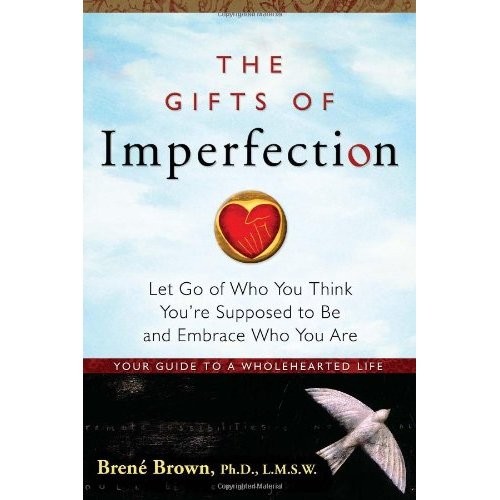
Talk to The Gifts of Imperfection like its author wrote you back.
Get the ideas that fit your life — not generic summaries.
- Chat with the book
- Audiobook-style main ideas
- Adapts to your life and goals
- Helps you take action
Key takeaways
- 1.
Worthiness is not earned through achievement or approval — it's a prerequisite for wholehearted living, not a reward for it.
- 2.
Perfectionism is not about self-improvement; it's a shield against judgment. It guarantees failure because no output can ever be safe from criticism.
- 3.
Shame thrives on secrecy and silence. The antidote is not positive self-talk but empathy — feeling heard and accepted without judgment.
- 4.
Guilt says 'I did something bad' and motivates repair. Shame says 'I am bad' and motivates hiding. They feel similar but lead in opposite directions.
- 5.
Numbing difficult emotions — with work, food, drink, screens — also numbs joy and gratitude. You can't selectively dull feeling.
- 6.
Cultivating creativity, play, and rest is not frivolous; it is how people stay connected to meaning and resilience over a lifetime.
- 7.
Belonging is not the same as fitting in. Fitting in requires you to change to be accepted; belonging means being accepted as you are.
Discussion questions
Use these on your own, with a book club, or as chat starters in Superbook. Book club version, ready to copy or print →
- 1.
Brown argues worthiness is a starting point, not a destination. What would it mean to act from a place of already being enough in an area of your life where you currently feel like you're not?
- 2.
Which of her ten guideposts feels most uncomfortable to you — and what does that discomfort tell you?
- 3.
She distinguishes perfectionism from healthy striving. Where in your life is perfectionism actually protecting you from judgment rather than improving your work?
- 4.
Think of the last time you felt genuine shame rather than guilt. What made you want to hide rather than repair?
- 5.
Brown says numbing one emotion numbs them all. What do you use to numb difficulty, and what might you be missing as a result?
- 6.
The distinction between belonging and fitting in is central to the book. Where in your life do you fit in rather than belong? What would belonging look like there?
- 7.
She writes about rest and play as non-negotiable for resilience, not luxuries. How much genuine play do you have in your life right now?
- 8.
Brown's research is based on qualitative interviews with people she calls 'Wholehearted.' Who in your own life seems to live this way? What do you notice about them?
- 9.
The book is partly a personal confession from the researcher about her own struggles. Does that make it more credible to you, or does it make you trust the research less?
- 10.
Empathy is the antidote to shame, Brown argues — not advice or reassurance. Think of a recent moment when you tried to help someone in pain. Did you offer empathy or advice?
- 11.
The book has been criticized for being more memoir than science. Does its research base matter to you, or do you evaluate it primarily on whether it's useful?
Themes
Frequently asked questions
-
Is The Gifts of Imperfection a research book or a self-help book?
It's both, but leans toward self-help. Brown is a credentialed researcher with a real qualitative data set, but this book presents findings in practical, accessible terms rather than academic ones. Readers who want the full research context should also read her later books, which develop the same ideas in more depth.
-
How does this book differ from Daring Greatly?
The Gifts of Imperfection is shorter and more accessible, structured around ten practical guideposts. Daring Greatly develops the vulnerability argument at much greater length and with more nuance, particularly for workplaces and relationships. If you've read one and want more, the other is worth adding.
-
Who should read The Gifts of Imperfection?
People who recognize they're living by rules about worthiness that don't serve them — perfectionism, people-pleasing, achievement as identity — and want a framework for loosening those patterns. It works well as a book club read because the guideposts generate specific, personal conversation.
-
Is this book worth reading if you've already read Daring Greatly?
Probably not essential, though the ten-guidepost structure gives it a different texture. Start here if you haven't read Brown; move to Daring Greatly for more depth.
-
What's the single most useful idea in the book?
The distinction between shame and guilt. Most people conflate them, but the behavioral and emotional consequences are very different. Guilt motivates repair; shame motivates hiding. Once you can tell them apart in real time, the practical implications are significant.
Similar books
Self-Compassion: The Proven Power of Being Kind to Yourself
Kristin Neff
Lost Connections
Johann Hari

Man's Search for Meaning
Viktor E. Frankl

A General Theory of Love
Thomas Lewis, Fari Amini, and Richard Lannon
