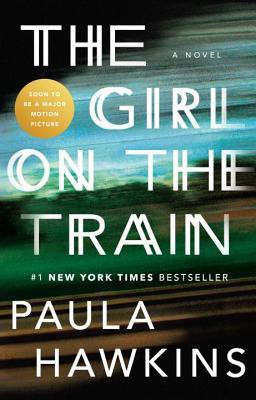
Talk to The Girl on the Train like its author wrote you back.
Get the ideas that fit your life — not generic summaries.
- Chat with the book
- Audiobook-style main ideas
- Adapts to your life and goals
- Helps you take action
The Girl on the Train, in detail
Rachel Watson takes the same commuter train every day, passing the house where she used to live with her ex-husband Tom, who now lives there with his new wife. She watches another couple — Megan and Scott — from the window and invents a life for them. When Megan disappears, Rachel inserts herself into the investigation, but her blackout drinking means she can't reliably account for her own movements on the night in question. The novel is told from three women's perspectives — Rachel, Megan, and Anna (Tom's current wife) — circling the same night from different distances.
The Girl on the Train arrived in the immediate wake of Gone Girl and was positioned in the same domestic-thriller lane: multiple unreliable female narrators, a missing woman, a husband who may or may not be the villain. The comparison is apt but limited. Where Flynn's novel is interested in gender performance and narrative control, Hawkins is more interested in the specific dynamics of coercive control — how an abusive partner rewrites a woman's memory of her own experience. The revelation about Rachel's blackout episodes, when it comes, is the novel's most unsettling element.
Hawkins' prose is cleaner and less baroque than Flynn's, and the three-narrator structure works mechanically rather than elegantly — the voices aren't as differentiated as they might be. But the novel's portrait of Rachel is genuinely sympathetic without being saccharine: she is a mess, she does stupid things, and the reader understands exactly why. The English commuter suburb setting — Ashbury, Witney — gives the book a particular gray texture that the American film adaptation loses by moving to New York.
The Girl on the Train is a more conventional thriller than Gone Girl, with a more satisfying and less ambiguous ending. Readers who found Gone Girl's ending too murky will prefer this one. Readers looking for the structural complexity of Flynn's work should adjust expectations — this is a well-executed page-turner with a real psychological center, not a literary puzzle.
The big ideas
- 1.
Rachel's blackout drinking is not just a plot device — the novel uses it to explore how abusive partners exploit gaps in memory and self-trust to maintain control.
- 2.
The three-narrator structure lets Hawkins keep the same events opaque to each woman in different ways. The reader assembles a picture that none of the characters can see whole.
- 3.
Megan's diary entries establish her past before the reader knows what happened to her — the effect is to make her disappearance feel like a loss rather than just a plot catalyst.
