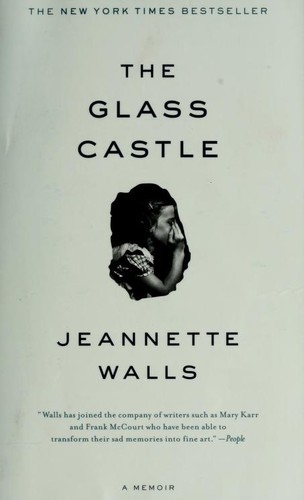
Talk to The Glass Castle: A Memoir like its author wrote you back.
Get the ideas that fit your life — not generic summaries.
- Chat with the book
- Audiobook-style main ideas
- Adapts to your life and goals
- Helps you take action
The Glass Castle: A Memoir, in detail
The Glass Castle is Jeannette Walls's memoir about growing up as the second of four children in a family that moved constantly across the American Southwest and West Virginia, rarely had enough to eat, and existed almost entirely outside conventional institutions. Her father Rex was brilliant, charming, and alcoholic — a man who could explain the stars and plan impossible engineering projects but couldn't hold a job or stop drinking. Her mother Rose Mary was an artist who valued creative freedom over the obligations of feeding children. The title refers to Rex's lifelong promise to build his family a spectacular glass house powered by solar energy, a promise he never came close to keeping.
Walls tells the story in plain, unguarded prose that trusts readers to draw their own conclusions. She doesn't editorialize heavily about her parents. She describes the family digging through dumpsters for food, children sleeping in cardboard boxes for warmth, her father spending grocery money on alcohol, and her mother hoarding a chocolate bar while her children went hungry. She also describes him teaching her to swim by throwing her into a pool and her parents pointing out constellations on clear desert nights. The book holds both realities at once, which is what makes it work.
The family's years in Welch, West Virginia — Rex's hometown — are the memoir's bleakest stretch. The house was literally crumbling: no heat, no plumbing, a hole in the floor. Walls and her siblings learned early that survival depended on themselves, not their parents. The older children eventually made their way to New York City, where Walls built a career as a gossip columnist while her parents, by choice, lived on the streets of Manhattan for a period.
What the memoir resists is easy catharsis. Walls doesn't conclude that her parents were simply bad people, nor does she frame her survival as triumph over them. The Glass Castle asks harder questions about love, loyalty, and what adults owe their children — and leaves many of them open. Readers who grew up in stable homes sometimes find it difficult to accept that Walls is not angrier. That discomfort is part of what the book is doing.
The big ideas
- 1.
Rex Walls was a gifted, charismatic man who could not subordinate his personal freedom and addictions to the needs of his children. The book makes no attempt to resolve this contradiction.
- 2.
Walls's childhood produced real competence. Scrounging for food, navigating unstable environments, and solving problems without adult help gave the children skills that proved useful later — at a steep cost.
- 3.
Rose Mary Walls treated motherhood as a constraint on her artistic identity. Her refusal to use a teaching salary to feed her children is the memoir's hardest scene to rationalize.
