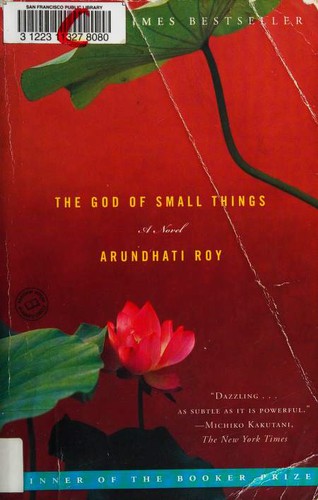
Talk to The God of Small Things like its author wrote you back.
Get the ideas that fit your life — not generic summaries.
- Chat with the book
- Audiobook-style main ideas
- Adapts to your life and goals
- Helps you take action
What it argues
The God of Small Things opens in 1993, with Rahel returning to her childhood home in Ayemenem, Kerala, to visit her twin brother Estha. Both are damaged people, hollowed out by events that happened when they were seven years old, in 1969. The novel moves between these two time periods in fractured, circling chapters — building toward a catastrophe it keeps deferring, loading each moment before it with an accumulating dread. The central event involves their mother Ammu's love affair with Velutha, an Untouchable man, and the consequences that affair triggers in a family already under multiple pressures.
Roy is writing about caste — about the Love Laws, as she calls them, the laws that dictate who can love whom and how much. These laws are never stated; they are just the structure of the world the characters move through. Velutha's position as an Untouchable makes the affair between him and Ammu not just socially forbidden but politically catastrophic, particularly because his political involvement with a Marxist party has created enemies within the family. The novel shows how private transgression and political violence become entangled in ways that destroy the most vulnerable.
What it gets right
- 1.
The Love Laws — Roy's term for the unspoken social codes governing who can love whom — function as the novel's central structure. They are never articulated directly, only enforced catastrophically.
- 2.
The novel uses a child's fractured perception of events as both narrative method and thematic statement: children absorb the consequences of adult political and sexual transgression without the framework to understand them.
- 3.
Velutha is the novel's most fully realized character in some ways, and also the most victimized — Roy is clear that his death is enabled by almost everyone in the novel, including those who claim progressive politics.
What it covers
Who wrote it
Arundhati Roy is an Indian author and political activist. The God of Small Things, her debut novel, won the Booker Prize in 1997 and became an international bestseller. After its publication she turned primarily to political nonfiction — essays collected in The Greater Common Good, The Algebra of Infinite Justice, and Capitalism: A Ghost Story — focusing on India's dam projects, nuclear tests, caste violence, and corporate power. Her second novel, The Ministry of Utmost Happiness, appeared in 2017, twenty years after the first. She lives in New Delhi.
