Talk to The Good Gut like its author wrote you back.
Get the ideas that fit your life — not generic summaries.
- Chat with the book
- Audiobook-style main ideas
- Adapts to your life and goals
- Helps you take action
What it argues
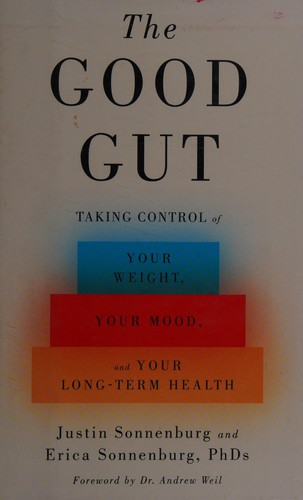
Justin Sonnenburg is a microbiologist at Stanford who studies the gut microbiome, and The Good Gut is his attempt to translate that research into something useful for non-scientists. Written with his wife Erica, also a microbiologist, the book covers what the microbiome is, how it develops, what disrupts it, and how diet and lifestyle choices influence its composition and therefore downstream health outcomes.
The Sonnenburgs' central thesis is that the Western diet — low in fiber, high in processed foods, heavy on antibiotics and sanitizing agents — has progressively impoverished the human microbiome relative to what our ancestors carried and what people in non-industrial societies still carry. This impoverishment, they argue, is linked to the rise of chronic conditions that are rare in traditional societies and epidemic in industrial ones: inflammatory bowel disease, autoimmune disorders, obesity, allergies, and possibly mental health conditions. The mechanism is primarily immunological — the microbiome calibrates the immune system, and a depleted one calibrates it poorly.
What it gets right
- 1.
The gut microbiome is a community of trillions of microorganisms that coevolved with humans and now serves essential functions in immune regulation, digestion, and metabolism.
- 2.
The Western diet has progressively depleted microbial diversity compared to traditional and hunter-gatherer populations. This disruption is likely connected to rising rates of inflammatory and autoimmune disease.
- 3.
Dietary fiber is the primary food source for gut bacteria. The variety of fiber matters as much as the amount — different fibers feed different bacterial strains.
What it covers
Who wrote it
Justin Sonnenburg is a professor of microbiology and immunology at Stanford University, where his lab studies the relationship between gut microbiota and human health. He co-wrote The Good Gut with his wife Erica Sonnenburg, also a researcher at Stanford. Their subsequent research, including a widely cited 2021 Cell paper comparing high-fiber and high-fermented-food diets, has become influential in the field. The Sonnenburgs are among the more publicly engaged researchers working on microbiome science.
