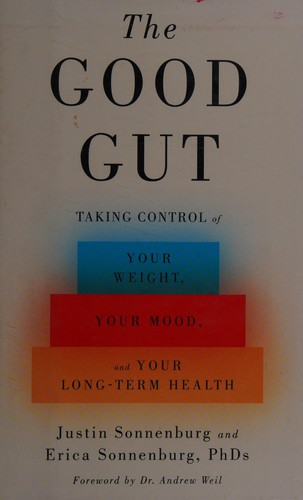
The Good Gut by Justin Sonnenburg is a 2015 health book about microbiome, gut health, diet. The gut microbiome is a community of trillions of microorganisms that coevolved with humans and now serves essential functions in immune regulation, digestion, and metabolism.
Summary
Justin Sonnenburg is a microbiologist at Stanford who studies the gut microbiome, and The Good Gut is his attempt to translate that research into something useful for non-scientists. Written with his wife Erica, also a microbiologist, the book covers what the microbiome is, how it develops, what disrupts it, and how diet and lifestyle choices influence its composition and therefore downstream health outcomes.
The Sonnenburgs' central thesis is that the Western diet — low in fiber, high in processed foods, heavy on antibiotics and sanitizing agents — has progressively impoverished the human microbiome relative to what our ancestors carried and what people in non-industrial societies still carry. This impoverishment, they argue, is linked to the rise of chronic conditions that are rare in traditional societies and epidemic in industrial ones: inflammatory bowel disease, autoimmune disorders, obesity, allergies, and possibly mental health conditions. The mechanism is primarily immunological — the microbiome calibrates the immune system, and a depleted one calibrates it poorly.
The practical prescription centers on MACs — microbiota-accessible carbohydrates, meaning dietary fiber of various kinds. The Sonnenburgs are emphatic that variety matters as much as quantity: different bacterial strains feed on different fibers, and a monotonous diet starves much of the community even if it's technically high in fiber. The book includes recipes and a discussion of fermented foods, probiotics, and the limitations of current probiotic products.
What distinguishes The Good Gut from most microbiome popular science is its epistemic honesty. The Sonnenburgs are willing to say what they don't know, flag which findings have not been replicated in humans, and acknowledge that the field is young enough that certainty is premature. This makes the book more reliable, if also more hedged, than competitors happy to make strong dietary claims. The academic grounding shows throughout, and the book rewards readers who want the reasoning behind the recommendations rather than just the conclusions.
Talk to The Good Gut like its author wrote you back.
Get the ideas that fit your life — not generic summaries.
- Chat with the book
- Audiobook-style main ideas
- Adapts to your life and goals
- Helps you take action
Key takeaways
- 1.
The gut microbiome is a community of trillions of microorganisms that coevolved with humans and now serves essential functions in immune regulation, digestion, and metabolism.
- 2.
The Western diet has progressively depleted microbial diversity compared to traditional and hunter-gatherer populations. This disruption is likely connected to rising rates of inflammatory and autoimmune disease.
- 3.
Dietary fiber is the primary food source for gut bacteria. The variety of fiber matters as much as the amount — different fibers feed different bacterial strains.
- 4.
The microbiome calibrates the immune system from early life. Disruptions in infancy, through antibiotic use or formula feeding, can have lasting immunological consequences.
- 5.
Antibiotics have important medical uses but are significantly over-prescribed. Their effect on the microbiome can persist for months to years and may never fully reverse.
- 6.
Fermented foods and probiotics can influence microbiome composition, but current probiotic products are limited in diversity and the research on their effects is still early.
- 7.
The gut-brain axis is real and bidirectional: gut bacteria influence neurotransmitter production, and stress and anxiety alter microbial composition. The therapeutic implications remain under investigation.
- 8.
Children who grow up with dogs, in rural environments, or with early diverse microbial exposure tend to have lower rates of allergy and autoimmune disease — evidence for the hygiene hypothesis.
Discussion questions
Use these on your own, with a book club, or as chat starters in Superbook. Book club version, ready to copy or print →
- 1.
The Sonnenburgs argue the Western diet has impoverished our microbiome over generations. Do you find that frame convincing, or does it romanticize traditional diets?
- 2.
If microbial diversity tracks with health outcomes, what are the practical limits of improving it through diet alone, given how much was lost before any of us were born?
- 3.
The book emphasizes fiber variety over fiber quantity. Does that nuance change how you think about what a healthy diet actually looks like?
- 4.
How do you weigh the established benefits of antibiotics against the microbiome disruption they cause? Did the book shift your thinking?
- 5.
The Sonnenburgs include recipes. Did that practical layer make the book more or less credible to you as a science text?
- 6.
The hygiene hypothesis — that reduced microbial exposure drives allergy and autoimmune disease — is contested. What would it take to convince you it's correct?
- 7.
If the microbiome is partly inherited from our parents and shaped in infancy, how much of adult gut health is within our control?
- 8.
The book was published in 2015 and the field has moved. What would you most want updated — the diet sections, the immune function research, or the mental health connections?
- 9.
The Sonnenburgs advocate for eating like our ancestors in some respects. How do you apply that kind of ancestral-environment reasoning to other areas of health or life?
- 10.
The book's tone is academic but accessible. Did the scientific background of the authors make you more or less willing to follow their recommendations?
- 11.
What single change in eating or lifestyle did you find most plausible or most worth trying after reading The Good Gut?
Themes
Frequently asked questions
-
What is The Good Gut about?
It is a microbiome science book written by two Stanford researchers. It explains how the gut microbial community develops, what disrupts it, and how diet can support or harm it. The Sonnenburgs argue that fiber diversity is the key practical lever for maintaining a healthy microbiome.
-
Is The Good Gut worth reading?
Yes, especially alongside Gut by Giulia Enders or The Microbiome Solution. It is more rigorous than most popular microbiome writing and honest about what is not yet proven. Readers who want confident dietary prescriptions may find it frustratingly hedged.
-
How long is The Good Gut?
Around 280 pages including recipes, roughly five hours of reading. The scientific sections are denser than the practical ones.
-
Who should read The Good Gut?
Readers interested in the microbiome who want more than a wellness blog overview but less than a textbook. It suits people with chronic digestive or immune issues, parents thinking about infant nutrition, and anyone skeptical of oversimplified diet advice.
-
Does The Good Gut recommend specific probiotics?
It discusses probiotics but is cautious about recommending specific products. The Sonnenburgs note that most commercial probiotics contain limited bacterial diversity and limited evidence of lasting effect, and that fermented foods may be more useful.