Talk to The Good Heart like its author wrote you back.
Get the ideas that fit your life — not generic summaries.
- Chat with the book
- Audiobook-style main ideas
- Adapts to your life and goals
- Helps you take action
The Good Heart, in detail
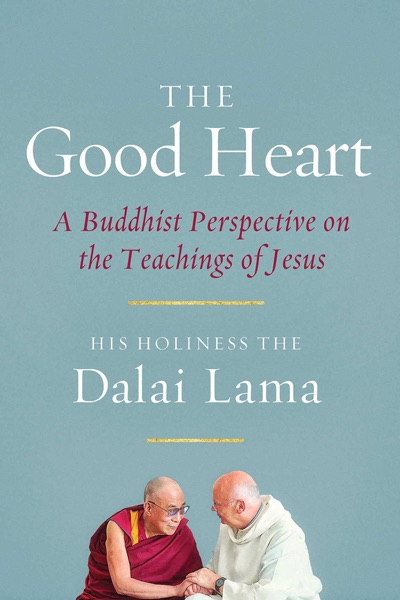
The Good Heart records the Dalai Lama's commentary on selected passages from the Christian Gospels, delivered at a 1994 seminar organized by the John Main Institute in London. The event was unusual: a Buddhist monk offering sustained scriptural interpretation to a mostly Christian audience, not to convert or debate but to illuminate through comparison. The Dalai Lama chose passages from all four Gospels and read them as an informed outsider — respectful, genuinely curious, and willing to find parallels with Buddhist teaching while being honest about the differences.
The central theme is the "good heart" itself — the cultivation of genuine compassion and altruistic motivation as the foundation of a spiritual life. The Dalai Lama argues that this commitment is present in both Buddhism and Christianity, despite deep differences in metaphysics and cosmology. He finds in Jesus's teaching on love of enemies a parallel to the Mahayana Buddhist ideal of bodhicitta — the awakening mind that generates compassion for all sentient beings without exception. He is careful to distinguish between surface similarities and genuine convergence, noting where the traditions speak the same language and where they diverge in ways that matter.
The format is generous with intellectual substance. After each commentary, Christian participants — theologians and contemplatives including Laurence Freeman OSB — respond with questions and reflections. The exchanges are among the most genuinely productive examples of interfaith dialogue available in book form. Nobody is reduced; nobody is converted. The Dalai Lama expresses authentic admiration for the Christian contemplative tradition without suggesting that Christians should become Buddhists or that the traditions are essentially the same.
The book is short and meditative rather than argumentative. It does not offer a systematic comparison of the two traditions. What it offers is a demonstration that serious practitioners from different traditions can learn from each other's scriptures, that the encounter enlarges rather than diminishes each perspective, and that the good heart — the sincere motivation to alleviate suffering — is recognizable across every difference.
The big ideas
- 1.
Genuine interfaith dialogue requires approaching another tradition's scripture as a real practitioner, not as a debater or an ecumenical flattener of differences.
- 2.
The cultivation of the 'good heart' — sincere compassion and altruistic motivation — is a common foundation across Buddhist and Christian ethical teaching despite deep metaphysical differences.
- 3.
Jesus's teaching on love of enemies parallels the Mahayana concept of bodhicitta but arrives from different premises. The similarity is real without being identity.
