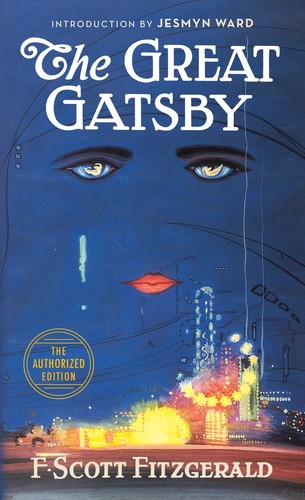
Talk to The Great Gatsby like its author wrote you back.
Get the ideas that fit your life — not generic summaries.
- Chat with the book
- Audiobook-style main ideas
- Adapts to your life and goals
- Helps you take action
What it argues
The Great Gatsby is narrated by Nick Carraway, a young Midwesterner who moves to Long Island in the summer of 1922 and finds himself adjacent to the fabulous, mysterious parties of his neighbor Jay Gatsby. Gatsby, fabulously wealthy by means nobody can quite identify, is single-mindedly devoted to winning back Daisy Buchanan, the golden girl he fell in love with years ago and who married the brutish old-money Tom Buchanan while Gatsby was overseas. The novel is short and nearly perfect in its compression: everything serves the central collision between Gatsby's pure, impossible longing and the corrupt world he has tried to buy his way into.
Beneath its Jazz Age glitter, the book is about the American Dream as a beautiful lie. Gatsby has reinvented himself completely — new name, new accent, new mansion, new biography — and his faith in self-creation is both his most American quality and the thing that destroys him. Fitzgerald renders the old-money East Egg and the new-money West Egg as two flavors of emptiness, and the Valley of Ashes between them as the hidden cost of all that glamour. The green light across the bay is one of literature's most enduring images: the thing you're always reaching toward and can never quite touch.
What it gets right
- 1.
Gatsby's tragedy is not that he fails to get Daisy but that he confuses her with what she represents: a past he cannot accept is gone and a future he has built entirely out of illusion.
- 2.
The green light is Fitzgerald's most efficient symbol: it names the condition of perpetual striving that the novel sees as both distinctly American and fundamentally self-defeating.
- 3.
Old money and new money are different in manners but identical in moral emptiness. Tom and Daisy's carelessness is the real indictment, not Gatsby's criminality.
What it covers
Who wrote it
F. Scott Fitzgerald (1896–1940) was an American novelist and short story writer whose work defined the Jazz Age. He published four novels — This Side of Paradise, The Beautiful and Damned, The Great Gatsby, and Tender Is the Night — along with more than 160 short stories. Fitzgerald struggled with alcoholism and financial instability for most of his adult life and died at 44 largely believing himself a failure. The Great Gatsby, now regarded as one of the greatest American novels, sold modestly in his lifetime and was rediscovered after World War II.
