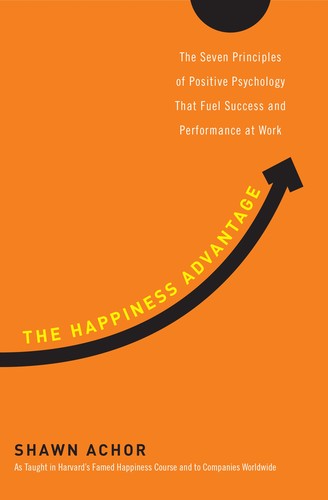
Talk to The Happiness Advantage like its author wrote you back.
Get the ideas that fit your life — not generic summaries.
- Chat with the book
- Audiobook-style main ideas
- Adapts to your life and goals
- Helps you take action
The Happiness Advantage, in detail
Shawn Achor's core claim inverts a common assumption about success and happiness. Most people believe that success leads to happiness — achieve the goal, then feel good. Achor argues the research runs the other way: positive affect precedes and enables better performance. A brain primed toward positivity processes more possibilities, solves problems faster, and sustains effort longer than one in neutral or negative states.
The book draws on Achor's decade of research at Harvard and his work as a consultant teaching positive psychology principles to employees at companies including UBS and KPMG. He presents seven principles, among them the Tetris Effect (training the brain to scan for positives rather than deficits), the Fulcrum and Lever (mindset as the lever that shifts how much power you have on a given task), and the 20-Second Rule (reducing the friction for desired behaviors by making them just slightly easier to initiate than the alternatives you want to avoid).
The writing is anecdote-heavy and frequently energetic, which suits the subject. Achor opens with an extended story about convincing himself his broken arm didn't hurt by redirecting a young sibling's attention. Whether that story is literal or illustrative, it sets the tone: the book is less about clinical psychology and more about accessible, immediate practices. Each principle comes with specific interventions — writing down three gratitudes daily, journaling one positive experience, meditating, exercising, performing acts of kindness — all drawn from peer-reviewed research but presented without the hedges.
The book's weakness is the opposite of its strength. The research is real but the effect sizes are rarely mentioned, and Achor's enthusiasm sometimes outruns the evidence. The claim that two minutes of positive journaling can rewire your brain in 21 days is stated confidently but the underlying neuroscience is more contested than the text implies. That said, the practical interventions are low-cost and the principle — that mood shapes cognition — is well-supported. For readers who want a research-backed but readable case for cultivating positivity, Achor delivers.
The big ideas
- 1.
Happiness is not the result of success; it's a precondition for it. A positive brain outperforms a neutral one on nearly every measure of intelligence and creativity.
- 2.
The Tetris Effect: what you practice attending to shapes what you see. Train your brain to scan for positives and it will find them; train it to scan for threats and it will find those instead.
- 3.
The Fulcrum and Lever principle: changing your mindset about a task changes how much energy and skill you bring to it, independent of the task itself.
