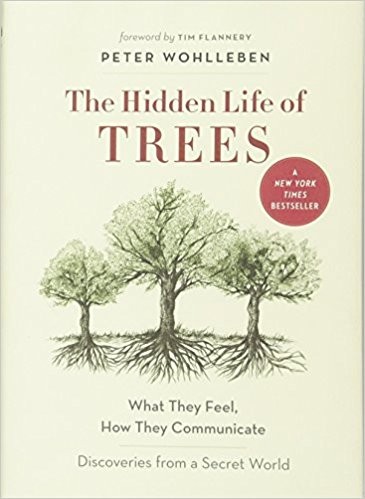
Talk to The Hidden Life of Trees like its author wrote you back.
Get the ideas that fit your life — not generic summaries.
- Chat with the book
- Audiobook-style main ideas
- Adapts to your life and goals
- Helps you take action
What it argues
Peter Wohlleben spent decades as a forester in the Eifel mountains of Germany, and The Hidden Life of Trees is his account of what scientific research and sustained observation have revealed about trees as social organisms. The book's central claim — that trees communicate through chemical signals and fungal networks, support one another across root systems, and behave in ways that look surprisingly like cooperation — was already supported by peer-reviewed research when Wohlleben wrote it, but had not yet reached general audiences.
Wohlleben writes with the authority of someone who has spent decades in forests, and the book is organized as a series of observations about tree behavior: how trees transmit alarm signals when attacked by insects, how parent trees nurse seedlings in their shade, how the wood wide web of mycorrhizal fungi connects trees underground in ways that allow nutrient sharing. He describes how trees in managed monocultures behave differently from trees in old-growth forests, and argues that foresters have largely misunderstood the social dynamics of the ecosystems they manage.
What it gets right
- 1.
Trees in old-growth forests share nutrients through mycorrhizal fungal networks in ways that appear to support weaker and younger trees in the community.
- 2.
Trees release chemical volatile compounds when attacked by insects that neighboring trees detect and use to prepare chemical defenses of their own.
- 3.
Mature trees in established forests often nurse their own seedlings, providing sugar through root connections in low-light conditions where photosynthesis is insufficient.
What it covers
Who wrote it
Peter Wohlleben is a German forester and author who spent more than two decades managing a state-owned forest in the Eifel region of Germany before transitioning to more ecologically oriented practices. He is the author of several books on forests and nature, including The Hidden Life of Animals and The Weather Detective. His approach blends firsthand forestry knowledge with scientific research translated for general readers. The Hidden Life of Trees has been translated into more than 30 languages and sold millions of copies worldwide.
