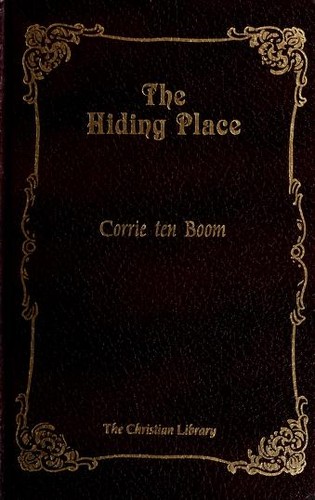
Talk to The Hiding Place like its author wrote you back.
Get the ideas that fit your life — not generic summaries.
- Chat with the book
- Audiobook-style main ideas
- Adapts to your life and goals
- Helps you take action
What it argues
Corrie ten Boom's memoir of her family's decision to hide Jewish people in their Haarlem home during the Nazi occupation of the Netherlands, and of the arrest, imprisonment, and concentration camp ordeal that followed, has been continuously in print since its 1971 publication and is one of the most widely read Christian testimonies of the twentieth century. It was written with assistance from Elizabeth and John Sherrill and draws on Corrie's own diaries and the recollections of surviving family members.
The ten Boom family were Dutch Reformed Christians who ran a watch repair shop that had been in the family for generations. Corrie's father Casper was a man of deep and unperformative faith who, when asked after the occupation began whether harboring Jews was worth risking his children's lives, replied that it would be an honor to give his life for God's people. The family's decision to help was not primarily political; it was theological. They believed they were commanded to do it.
What it gets right
- 1.
Faith that costs nothing is faith that proves nothing. The ten Boom family's decision to hide Jews was predicated on a theological conviction that was tested almost immediately to its limits.
- 2.
Betsie ten Boom's spiritual radiance under extreme suffering is the book's most challenging and most discussed element. Whether it is edifying or unnerving depends substantially on the reader's prior convictions.
- 3.
Forgiveness as a concrete practice: the book's most famous passage describes Corrie's post-war encounter with a former Ravensbrück guard, and her inability to shake his hand until she prayed for the ability to do so.
What it covers
Who wrote it
Cornelia "Corrie" ten Boom (1892–1983) was a Dutch watchmaker and Christian who, with her family, helped hide Jewish people from the Nazis during the German occupation of the Netherlands. She was arrested in 1944, imprisoned at Scheveningen, Vught, and Ravensbrück concentration camp, and survived liberation in December 1944. After the war she traveled the world for thirty-five years speaking on forgiveness and faith, assisted by the Ravensbruck rehabilitation center she founded in accordance with her sister Betsie's dying vision. She received the designation of Righteous Among the Nations from Yad Vashem in 1967. The Hiding Place was published when she was seventy-nine.
