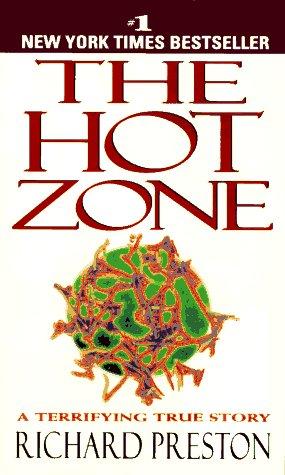
Talk to The Hot Zone like its author wrote you back.
Get the ideas that fit your life — not generic summaries.
- Chat with the book
- Audiobook-style main ideas
- Adapts to your life and goals
- Helps you take action
What it argues
The Hot Zone is Richard Preston's account of the discovery of filoviruses — Marburg and Ebola — and, more urgently, the 1989 outbreak of a closely related virus in a primate facility in Reston, Virginia, twenty miles from Washington DC. Preston writes it as a work of narrative nonfiction that reads at the pace of a thriller, though the material is real and the technical grounding is solid enough to give it genuine weight.
The book opens with graphic accounts of the first known Ebola cases in Africa in the 1970s, using visceral clinical detail to establish what the virus does to the human body. These early chapters are deliberately shocking. Preston's argument, implicit throughout, is that the gap between our ordinary sense of safety and the actual fragility of our biosecurity systems is vast. A virus that kills 90 percent of those it infects and liquefies internal tissue is not a movie monster; it's a natural object that existed for millions of years before humans encountered it, and it doesn't need intention to spread.
What it gets right
- 1.
Filoviruses like Ebola and Marburg cause hemorrhagic fever with fatality rates up to 90 percent in some outbreaks and have no proven treatment.
- 2.
The 1989 Reston outbreak put an airborne filovirus variant twenty miles from Washington DC. It was lethal to monkeys but not, fortunately, to humans.
- 3.
Biosafety Level 4 protocols are the highest level of biological containment, and the Army team's operation in Reston revealed how difficult they are to maintain under field conditions.
What it covers
Who wrote it
Richard Preston is an American author and journalist whose work focuses on science and medicine, particularly biological threats and infectious disease. He has written for The New Yorker since the 1980s and is the author of several books including The Cobra Event, The Demon in the Freezer, and Crisis in the Red Zone. The Hot Zone won the Pen/Martha Albrand Award for nonfiction. Preston has no formal scientific training; his strength is in rendering complex biological events in accessible narrative form, which has made him one of the most widely read science journalists of his generation.
