Talk to The House Hacking Strategy like its author wrote you back.
Get the ideas that fit your life — not generic summaries.
- Chat with the book
- Audiobook-style main ideas
- Adapts to your life and goals
- Helps you take action
What it argues
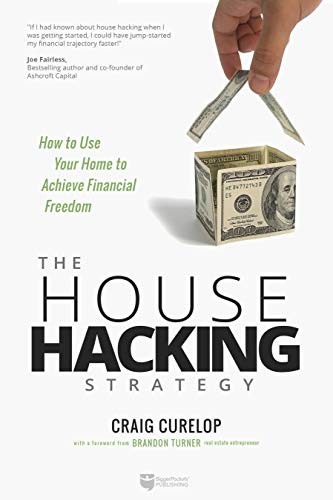
House hacking is the practice of buying a multi-unit or single-family property, living in one portion of it, and renting out the rest to offset or eliminate your housing payment. Craig Curelop used this strategy to go from deeply indebted to financially independent in his mid-twenties, and The House Hacking Strategy is his detailed walkthrough of exactly how he did it.
The book covers several variations. A classic house hack means buying a duplex, triplex, or fourplex, occupying one unit, and leasing the others. A single-family hack means renting out spare bedrooms or a finished basement on Airbnb or to long-term tenants. Curelop explains how owner-occupant financing — FHA loans, in particular — lets you enter the market with as little as 3.5 percent down, a threshold far lower than conventional investment property lending requires.
What it gets right
- 1.
House hacking lets you eliminate or drastically reduce your housing costs by having tenants pay your mortgage — often the largest single expense in a household budget.
- 2.
Owner-occupant financing (FHA, conventional 5% down) opens investment properties to buyers who couldn't qualify for a 20-25% investor down payment.
- 3.
Living in the property is temporary. The equity, cash flow, and experience you build are not. Short-term discomfort is the core trade-off the strategy requires.
What it covers
Who wrote it
Craig Curelop is a real estate investor and agent based in Denver, Colorado, known for using house hacking aggressively in his own life before writing about it. He began his career at BiggerPockets, the real estate investing community, and used the strategies described in this book to reach financial independence in his mid-twenties. He holds a degree from the University of Vermont and continues to invest in residential real estate. The House Hacking Strategy, published by BiggerPockets Publishing in 2019, is his first book.
