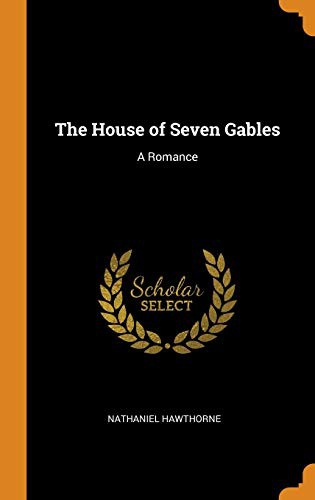
Talk to The House of the Seven Gables like its author wrote you back.
Get the ideas that fit your life — not generic summaries.
- Chat with the book
- Audiobook-style main ideas
- Adapts to your life and goals
- Helps you take action
What it argues
The House of the Seven Gables opens with a grim inheritance: the Pyncheon family's ancestral mansion in Salem, Massachusetts, was built on land seized from a man named Matthew Maule through a dubious accusation of witchcraft. Maule cursed the Pyncheons as he died, and the novel's action — set two centuries later — is Hawthorne's extended argument that the curse has been working ever since. The family is trapped in decline, haunted by old guilt and old property, while the Maule descendants live in obscurity nearby.
The novel follows Hepzibah Pyncheon, an elderly, near-sighted woman who has kept the house and its seven gables intact through sheer inertia, and her recently returned brother Clifford, who has spent thirty years in prison for a murder most readers suspect he didn't commit. Into this stalled situation comes their young cousin Phoebe, who represents energy, practicality, and the possibility of renewal — and Holgrave, a young daguerreotypist who turns out to have an unexpected connection to the family's history.
What it gets right
- 1.
The house itself is the novel's central character — it embodies the accumulation of Pyncheon guilt, and its physical deterioration mirrors the family's moral and material decline.
- 2.
Hawthorne argues that property acquired through injustice can transmit that injustice across generations — an idea that is less allegorical and more historical than it may initially appear.
- 3.
Hepzibah's predicament — an aristocrat forced to open a cent-shop to survive — is treated with sympathy and comedy simultaneously. She is more human than most characters in Hawthorne's fiction.
What it covers
Who wrote it
Nathaniel Hawthorne (1804–1864) was an American novelist and short story writer born in Salem, Massachusetts. His Puritan ancestry — which included a judge in the Salem witch trials — shaped his preoccupation with sin, guilt, and moral inheritance. His major works include The Scarlet Letter, The House of the Seven Gables, The Blithedale Romance, and the story collections Twice-Told Tales and Mosses from an Old Manse. He was a close friend of Herman Melville, who dedicated Moby-Dick to him.
