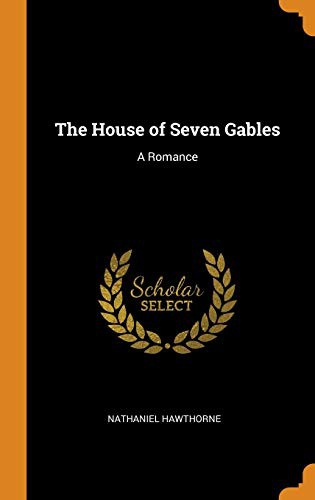
The House of the Seven Gables by Nathaniel Hawthorne is a 1851 literary fiction book about generational guilt, inherited sin, decline and renewal. The house itself is the novel's central character — it embodies the accumulation of Pyncheon guilt, and its physical deterioration mirrors the family's moral and material decline.
Summary
The House of the Seven Gables opens with a grim inheritance: the Pyncheon family's ancestral mansion in Salem, Massachusetts, was built on land seized from a man named Matthew Maule through a dubious accusation of witchcraft. Maule cursed the Pyncheons as he died, and the novel's action — set two centuries later — is Hawthorne's extended argument that the curse has been working ever since. The family is trapped in decline, haunted by old guilt and old property, while the Maule descendants live in obscurity nearby.
The novel follows Hepzibah Pyncheon, an elderly, near-sighted woman who has kept the house and its seven gables intact through sheer inertia, and her recently returned brother Clifford, who has spent thirty years in prison for a murder most readers suspect he didn't commit. Into this stalled situation comes their young cousin Phoebe, who represents energy, practicality, and the possibility of renewal — and Holgrave, a young daguerreotypist who turns out to have an unexpected connection to the family's history.
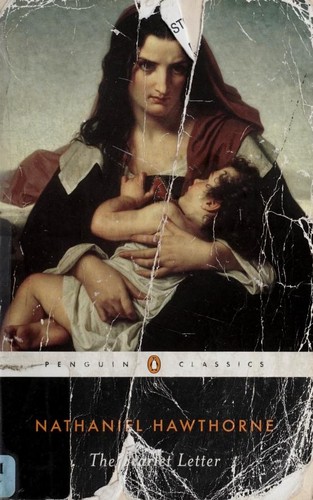
The book is slower and more domestic than The Scarlet Letter, and its allegorical weight sits heavier on the story. Hawthorne is interested in the question of whether a family — or a nation — can ever be free of its founding crimes, and whether physical inheritance (the house, the portrait, the deed) keeps guilt alive in ways that deliberate memory wouldn't. The novel was more popular with contemporary readers than The Scarlet Letter, which should tell you something about its accessibility and something about what nineteenth-century readers wanted.
The House of the Seven Gables is the second-tier Hawthorne — essential for anyone seriously interested in the author, but not the place to start, and less forceful than The Scarlet Letter in its moral geometry. The atmosphere is gothic, the pacing is leisurely, and the ending is considerably more optimistic than the rest of the book earns. Read it as an expansion of Hawthorne's preoccupations rather than a complete achievement in itself.
Talk to The House of the Seven Gables like its author wrote you back.
Get the ideas that fit your life — not generic summaries.
- Chat with the book
- Audiobook-style main ideas
- Adapts to your life and goals
- Helps you take action
Key takeaways
- 1.
The house itself is the novel's central character — it embodies the accumulation of Pyncheon guilt, and its physical deterioration mirrors the family's moral and material decline.
- 2.
Hawthorne argues that property acquired through injustice can transmit that injustice across generations — an idea that is less allegorical and more historical than it may initially appear.
- 3.
Hepzibah's predicament — an aristocrat forced to open a cent-shop to survive — is treated with sympathy and comedy simultaneously. She is more human than most characters in Hawthorne's fiction.
- 4.
Clifford Pyncheon, damaged by thirty years of false imprisonment, is one of Hawthorne's most affecting studies in what injustice does to a person's inner life.
- 5.
Phoebe functions as Hawthorne's version of restorative innocence, but he is careful not to make her simply a symbol — she has practicality and observation that the rest of the family lacks.
- 6.
Holgrave's identity as a Maule descendant is the novel's central twist, and it raises the question of whether the cycle of guilt can actually be broken or only deferred.
- 7.
The daguerreotype — a new technology in 1851 — appears throughout as a metaphor for how the past is captured and transmitted, without being fully understood.
Discussion questions
Use these on your own, with a book club, or as chat starters in Superbook. Book club version, ready to copy or print →
- 1.
Hawthorne suggests that the Pyncheon family's decline is the working-out of a curse. Do you read this literally, or as a metaphor for something like inherited privilege and its costs?
- 2.
Hepzibah is forced by poverty to open a shop and serve customers she considers her social inferiors. How does Hawthorne balance sympathy and gentle satire in her characterization?
- 3.
Clifford has been destroyed by thirty years of false imprisonment. Is his portrayal convincing as a study in psychological damage, or does it feel too schematic?
- 4.
Phoebe is sometimes described as too good to be true. Does that criticism feel fair to you, or does Hawthorne give her enough specific quality to avoid pure symbolism?
- 5.
The ending is considerably more optimistic than the atmospheric weight of the novel suggests it should be. Does that optimism feel earned, or do you think Hawthorne is forcing it?
- 6.
The house is described in detail — its architecture, its smell, its garden, its deterioration. What function does this close attention to setting serve in the novel's argument?
- 7.
Holgrave represents the reformist, democratic spirit of the 1840s — he distrusts inherited property and traditional authority. Does Hawthorne endorse his views, or complicate them?
- 8.
The daguerreotype appears several times as a way of seeing through surfaces to hidden truths. What do you think Hawthorne is saying about technology and perception?
- 9.
The Pyncheon judge — the novel's clearest villain — is publicly celebrated and privately corrupt. Is this a specifically American type for Hawthorne, or something more universal?
- 10.
Compare The House of the Seven Gables to The Scarlet Letter. What changes when Hawthorne sets the guilt in the present rather than in the seventeenth century?
- 11.
If the house represents inherited guilt that should be demolished, why do you think so many readers are drawn to the atmospheric power of the place Hawthorne creates?
Themes
Frequently asked questions
-
Is The House of the Seven Gables worth reading?
Yes, particularly if you have already read The Scarlet Letter and want to go deeper into Hawthorne's preoccupations with guilt and inheritance. It is more domestic and atmospheric than The Scarlet Letter, less formally controlled, and more emotionally accessible. Start with The Scarlet Letter and come to this one second.
-
Is The House of the Seven Gables hard to read?
The pace is slow and the prose is dense in places, but it is less allegorically demanding than The Scarlet Letter. The domestic scenes — particularly Hepzibah in the shop — are often warm and even funny. Readers who bounce off Hawthorne's symbolic register in the earlier novel sometimes find this one more hospitable.
-
What is the central theme of The House of the Seven Gables?
Whether a family — or a society — can ever be free of crimes committed in its founding. The Pyncheon fortune was built on injustice, and Hawthorne argues that the building itself transmits that injustice down the generations. The question is whether it can be broken, and whether the answer requires simply leaving or something more.
-
Is this a horror novel?
It has gothic atmosphere — a decaying mansion, a family curse, a portrait that seems alive, a mysterious death — but it is not primarily a horror novel in the modern sense. The supernatural elements are ambiguous, and Hawthorne is more interested in moral psychology than in terror. Readers who want unambiguous horror will not find it.
-
Who shouldn't read The House of the Seven Gables?
Readers who find the pacing of nineteenth-century American fiction too slow, or who want narrative momentum, will struggle. The novel is more interested in atmosphere and symbol than in plot, and the ending resolves things more neatly than the preceding 300 pages suggest they should be.