Talk to The Ideal Team Player like its author wrote you back.
Get the ideas that fit your life — not generic summaries.
- Chat with the book
- Audiobook-style main ideas
- Adapts to your life and goals
- Helps you take action
The Ideal Team Player, in detail
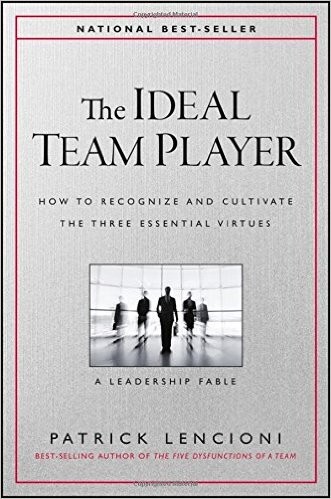
The Ideal Team Player is Patrick Lencioni's business fable about the three qualities that distinguish people who thrive in team environments from those who undermine them. Written in Lencioni's signature narrative style, the book follows a CEO navigating a family company acquisition and a leadership team that must hire quickly — which forces them to get explicit about what they're actually looking for in people.
The three virtues are humble, hungry, and smart. Humble means ego is not the primary concern — genuinely humble people don't need to protect their status or take credit, which allows real collaboration. Hungry means driven — self-motivated, diligent, and always looking for more to do rather than the minimum required. Smart in this context means interpersonally smart — having good judgment about how to interact with people, reading situations and adjusting accordingly, rather than purely intellectual intelligence.
The power of the framework is in the combinations. Any of the three virtues alone produces a specific type of difficult team member. Humble and hungry without smart is the "accidental mess-maker" — well-intentioned but oblivious, constantly creating interpersonal problems without knowing it. Humble and smart without hungry is the "lovable slacker" — pleasant to have around, limited in what they contribute. Hungry and smart without humble is the "skillful politician" — the most dangerous of the three, advancing their own interests while appearing to serve the team.
The practical focus of the non-narrative sections is on hiring and culture. Lencioni offers specific interview questions for each virtue and describes the cultural conditions that bring these virtues out in existing team members — and suppress them. The book is shorter and more prescriptive than The Advantage or The Five Dysfunctions, making it the easiest entry point into Lencioni's management thinking.
The big ideas
- 1.
The three virtues of the ideal team player are humble (not ego-driven), hungry (self-motivated and driven), and smart (interpersonally aware and effective).
- 2.
Any single virtue without the other two produces a specific type of problematic team member. The combinations matter as much as the individual qualities.
- 3.
Humble and hungry without smart is the accidental mess-maker — creates interpersonal problems without awareness or intent.
