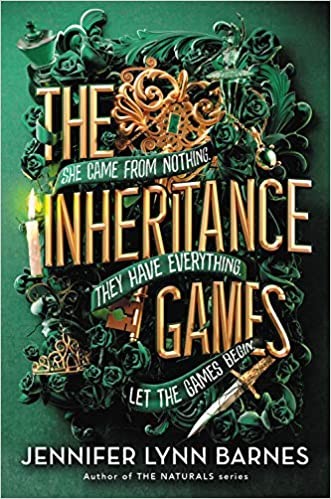
Talk to The Inheritance Games like its author wrote you back.
Get the ideas that fit your life — not generic summaries.
- Chat with the book
- Audiobook-style main ideas
- Adapts to your life and goals
- Helps you take action
The Inheritance Games, in detail
When broke teenager Avery Grambs is named the sole heir to billionaire Tobias Hawthorne's multi-billion-dollar estate, she has no idea why. She'd met the man once, briefly, and she isn't a relative. But the will is ironclad: Avery inherits everything, on the condition that she live in Hawthorne House with the four Hawthorne grandsons — Grayson, Jameson, Xander, and Nash — who've been cut out entirely. The house is a mansion full of hidden passages, coded messages, and generations of secrets, and someone very much wants Avery gone.
The novel is really about what people do with inherited power — how wealth shapes identity, how family myths calcify into family traps, and how someone with nothing can outmaneuver people with everything. Avery is a convincing protagonist precisely because she's smart enough to distrust her own good fortune. Barnes doesn't moralize about the Hawthornes' wealth; she lets the architecture of the house and the boys' obsessive, gameified upbringing do that work.
Barnes, a behavioral psychology professor turned bestselling YA author, structures the book as a nested puzzle: there's a mystery inside a mystery, each clue answered by a new question. The pacing is aggressive — short chapters, constant forward momentum — and the novel earns its compulsive readability. It isn't trying to be literary fiction; it's trying to be a page-turner, and it succeeds with confidence. The four brothers are distinct enough to be memorable without being fully realized characters, which is fine for what the book needs.
Readers who want plot-driven YA mystery with romantic tension, a lavish setting, and the satisfactions of a well-constructed puzzle will find this delivers. Readers after psychological depth or nuanced prose will bounce. The comparison point is less Gone Girl and more a polished Nancy Drew for the prestige-TV era — highly engineered to keep you reading until you're two hours past your bedtime.
The big ideas
- 1.
Inherited wealth shapes identity in ways the inheritors rarely recognize — the Hawthorne boys are as trapped by their grandfather's games as they are privileged by his money.
- 2.
The premise works because Barnes takes the puzzle seriously. Every clue earns its place; there's no structural cheating.
- 3.
Avery's outsider status is what makes her a useful lens. She can see the Hawthorne mythology clearly because she isn't inside it yet.
