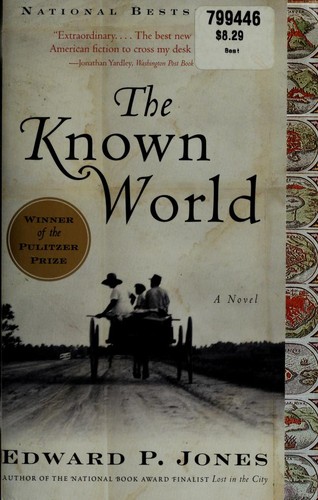
Talk to The Known World like its author wrote you back.
Get the ideas that fit your life — not generic summaries.
- Chat with the book
- Audiobook-style main ideas
- Adapts to your life and goals
- Helps you take action
What it argues
The Known World is set in antebellum Manchester County, Virginia, and concerns Henry Townsend — a formerly enslaved Black man who, after buying his freedom, becomes a slaveholder himself. When Henry dies young, his widow Caldonia struggles to maintain the plantation, and the community around them — enslaved people, free Blacks, white overseers, and county officials — is thrown into new arrangements of power and vulnerability.
Jones's subject is not simply slavery but what slavery does to everyone it touches — including those who were themselves enslaved and then replicate its structures. Henry Townsend's moral compromises are the book's central puzzle: how does a man who knew bondage choose to impose it? Jones does not offer a simple answer. He is more interested in showing how deeply the institution penetrated the psychologies and communities of both races, making even the ostensibly free complicit in its logic.
What it gets right
- 1.
The novel's central provocation — a formerly enslaved man who becomes a slaveholder — refuses the simple moral clarity that most slavery narratives offer.
- 2.
Jones's omniscient narrator moves through time freely, including into the futures of characters, making the novel feel less like story and more like the recording of consequences.
- 3.
The plantation after Henry's death becomes a microcosm of the antebellum South's complexity: the power structures do not disappear with the master, they disperse and reconfigure.
What it covers
Who wrote it
Edward P. Jones was born in Washington, D.C., and grew up in poverty, moving frequently as a child. He is the author of two story collections, Lost in the City (1992) and All Aunt Hagar's Children (2006), and the novel The Known World (2003), which won the Pulitzer Prize for Fiction, the National Book Critics Circle Award, and the International IMPAC Dublin Literary Award. He teaches at George Washington University. He is known for his slow, meticulous prose style and his work's deep engagement with Black life in Washington and the antebellum South.
