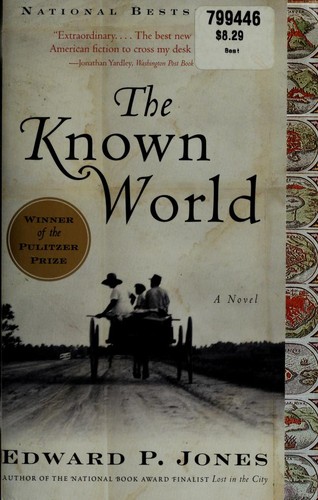
The Known World by Edward P. Jones is a 2003 historical fiction book about slavery and its moral corruption, power and its distortions, memory and consequence. The novel's central provocation — a formerly enslaved man who becomes a slaveholder — refuses the simple moral clarity that most slavery narratives offer.
Summary
The Known World is set in antebellum Manchester County, Virginia, and concerns Henry Townsend — a formerly enslaved Black man who, after buying his freedom, becomes a slaveholder himself. When Henry dies young, his widow Caldonia struggles to maintain the plantation, and the community around them — enslaved people, free Blacks, white overseers, and county officials — is thrown into new arrangements of power and vulnerability.
Jones's subject is not simply slavery but what slavery does to everyone it touches — including those who were themselves enslaved and then replicate its structures. Henry Townsend's moral compromises are the book's central puzzle: how does a man who knew bondage choose to impose it? Jones does not offer a simple answer. He is more interested in showing how deeply the institution penetrated the psychologies and communities of both races, making even the ostensibly free complicit in its logic.
The novel is formally unusual. Jones narrates in a godlike omniscient voice that moves freely through time — forward and backward, sometimes decades into the future of characters we've just met — and through the consciousness of dozens of people. The effect is panoramic and sometimes vertiginous. Jones's prose is slow and deliberate, full of digressions and subordinate clauses that keep stopping to record what happened to minor characters over the next fifty years. It is a novel that works like memory, or like history, filling in what linear narrative leaves out.
The Known World won the Pulitzer Prize and the National Book Critics Circle Award in 2004. Readers who love Toni Morrison's sweeping omniscience and the accumulated moral weight of Southern historical fiction will find this deeply rewarding. Those who want a plot-driven narrative will struggle with Jones's associative, digressive structure. It is a novel to be inhabited, not raced through.
Talk to The Known World like its author wrote you back.
Get the ideas that fit your life — not generic summaries.
- Chat with the book
- Audiobook-style main ideas
- Adapts to your life and goals
- Helps you take action
Key takeaways
- 1.
The novel's central provocation — a formerly enslaved man who becomes a slaveholder — refuses the simple moral clarity that most slavery narratives offer.
- 2.
Jones's omniscient narrator moves through time freely, including into the futures of characters, making the novel feel less like story and more like the recording of consequences.
- 3.
The plantation after Henry's death becomes a microcosm of the antebellum South's complexity: the power structures do not disappear with the master, they disperse and reconfigure.
- 4.
Freedom in this novel is always partial, conditional, and vulnerable — free Blacks can be kidnapped back into slavery, and their documents offer only intermittent protection.
- 5.
The novel accumulates minor characters with the same care it gives to major ones, producing a community rather than a protagonist — the county itself is the subject.
- 6.
Moral corruption in The Known World is not spectacular; it is mundane, structural, and passed on through the ordinary operations of ownership and law.
- 7.
The map that a formerly enslaved woman creates — of everything and everyone in the county — is one of American fiction's most striking images of what art and memory can do against erasure.
- 8.
Jones spent more than ten years writing the novel, and the prose reflects that patience: every sentence is placed with care, and the rewards accrue slowly.
Discussion questions
Use these on your own, with a book club, or as chat starters in Superbook. Book club version, ready to copy or print →
- 1.
Henry Townsend was enslaved and then became a slaveholder. How does Jones ask you to understand that — as tragedy, as moral failure, as something more complicated?
- 2.
The omniscient narrator tells us what will happen to characters before they make their choices. How does that foreknowledge change how you read those choices?
- 3.
Moses, the overseer who was himself enslaved, is a deeply ambiguous figure. Is he a villain in this novel? What is Jones arguing about his behavior?
- 4.
The 'known world' of the title refers partly to a map that appears late in the novel. What does that map mean to you as a reader, and what is Jones saying about art and memory?
- 5.
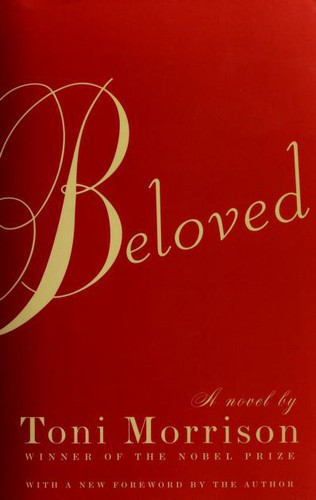
How does this novel's treatment of slavery compare to Morrison's Beloved? Where does Jones land harder, and where does Morrison?
- 6.
Free Black characters in the novel hold a precarious status — subject to re-enslavement at any moment. How does Jones use their vulnerability to complicate the meaning of freedom?
- 7.
The novel covers decades in the lives of many characters. Did you find the structure panoramic and rich, or difficult to follow? How did your experience of it change as you read?
- 8.
Caldonia inherits the plantation and does not immediately free the enslaved people on it. How did you read that choice — as weakness, self-interest, something else?
- 9.
Jones spent more than a decade working on this novel. Does that show in the prose, and if so, where?
- 10.
Several white characters in the novel are portrayed with sympathy or complexity. How does Jones balance that without softening the book's moral argument?
- 11.
The ending returns to the tapestry and the map made by Alice. What work is Jones asking those objects to do?
- 12.
Would this novel be different if Jones had made Henry Townsend a white man? What is specifically lost or gained by the choice to center a Black slaveholder?
Themes
Frequently asked questions
-
Is The Known World worth reading?
Yes, if you are willing to work with a deliberately slow, digressive novel. It is one of the most formally serious American novels of the 2000s, and its central question — about slavery's corruption of everyone it touched, including the formerly enslaved — is explored with more intelligence and patience than almost any other work of fiction.
-
Is The Known World hard to read?
The prose is dense and the narrative structure unusual: Jones moves freely through time, and the cast of characters is large. It is not fast reading. Some readers find the omniscient jumps forward in time disorienting at first. The payoff is cumulative rather than immediate.
-
What makes The Known World unusual as a slavery novel?
Most slavery narratives center white slaveholders and their power, or the experiences of enslaved people resisting that power. Jones places a formerly enslaved Black man who becomes a slaveholder at the center, which forces the reader to engage with the institution's moral complexity rather than its familiar moral geometry.
-
Who shouldn't read this book?
Readers who need a strong plot engine and a single protagonist will find the novel frustrating. Jones is interested in community and consequence over narrative momentum. If you want a thriller-paced historical novel, this is the wrong book.
-
Is there an adaptation?
No film or television adaptation has been produced as of 2026. The novel's formal complexity — its omniscient time-jumping and large cast — would make adaptation genuinely difficult.